
Hammond A-3vsHammond XK-4
Summary
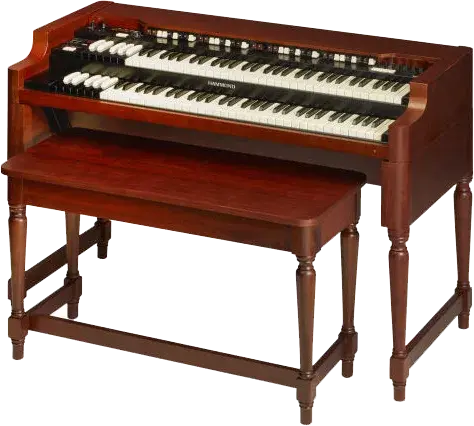
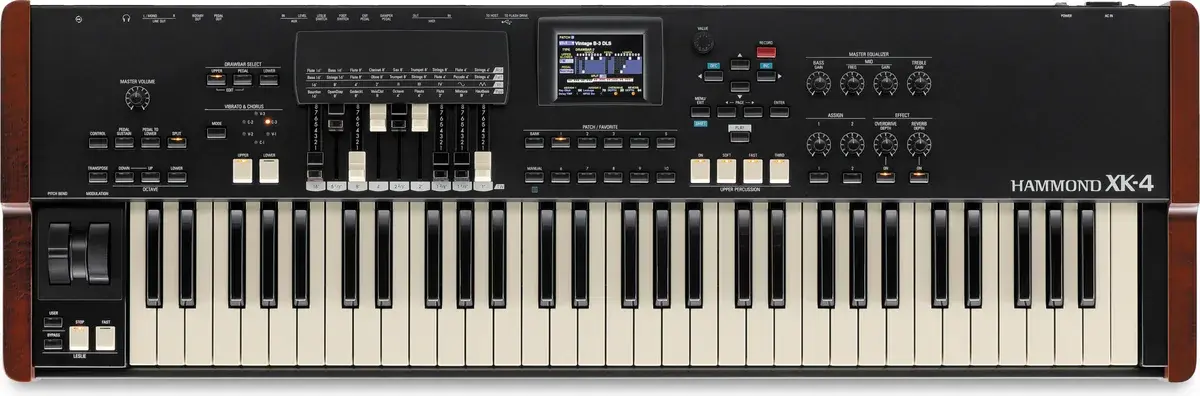
Hammond A-3 and Hammond XK-4: 2 Hammond organs compared side by side. They differ on 3 of 4 compared specifications.
| 2 items | Hammond A-3CurrentView details → | Hammond XK-4CurrentView details → |
|---|---|---|
| General | ||
| Manufacturer | Hammond | Hammond |
| Status | Current | Current |
| Keyboard | ||
| Manuals | — | 1 |
| Keys per manual | 61 | 61 |
| Key action | — | Waterfall |
| Keybed | Lower manual using the XK-5 key-bed and multi-contact system; upper manual and sound generation from an XK-5 (not included) | Semi-weighted square-front waterfall, velocity-sensitive, virtual multi-contact |
| Sound | ||
| Drawbars | — | Physical |
| Sound engine | — | MTW2 (Modelled Tone Wheel 2) organ engine |
| Organ models | — | Hammond MTW2 modelled tonewheels, Vx, Farf and Ace transistor organs, classical and theatre pipe organ |
| Polyphony | — | 61 (tonewheel organ) |
| Connections | ||
| Outputs | — | 1/4-inch unbalanced, Headphones, Leslie 11-pin |
| MIDI ports | — | DIN in, DIN out, USB |
| Pedal inputs | — | Sustain, Expression, Rotor speed, Footswitch |
| Features | ||
| Features | Requires XK-5, B-3-style red walnut cabinet, Detachable upper assembly, folding stand | Nine physical drawbars, Virtual multi-contact keying, Tube modelling, Digital Leslie (8 cabinets), Pitch and mod wheels, Rotary and organ pedal outputs, Aux input, Colour display, Beech side panels |
| Size & weight | ||
| Colours | Red walnut | Black |
| Dimensions (W × D × H) | — | 1004 × 322 × 109 mm |
| Weight | — | 9.4 kg |
Key differences
- Keybed: A-3 – Lower manual using the XK-5 key-bed and multi-contact system; upper manual and sound generation from an XK-5 (not included) XK-4 – Semi-weighted square-front waterfall, velocity-sensitive, virtual multi-contact
Both are the same on keys per manual (61).