
Rhodes Mark 7 AM 73vsRhodes MK8
Summary
Rhodes Mark 7 AM 73 and Rhodes MK8: 2 Rhodes stage keyboards compared side by side. They differ on 7 of 14 compared specifications.
Key differences
- Released: 2007 on the Mark 7 AM 73 and 2021 on the MK8.
- Aftertouch: Polyphonic on the Mark 7 AM 73 and None on the MK8.
- Keybed: 73 wooden keys with Rhodes' patented key-sensing system for MIDI velocity and aftertouch (polyphonic and channel) on the Mark 7 AM 73 and Rhodes custom spruce keys by Kluge Klaviaturen (Steinway group) on an oak and beech frame; ABS hammers with quad-zone tips on the MK8.
- Sound engine: Electromechanical: hammer-struck steel tines and tonebars read by electromagnetic pickups, into an active FET preamp on the Mark 7 AM 73 and Electromechanical: hammer-struck steel tines and tonebars read by electromagnetic pickups (precision-wound alnico), into an analogue preamp on the MK8.
Both are the same on keys (73), key action (Hammer-action), sections (Electric piano) and drawbars (None).
| 2 items | 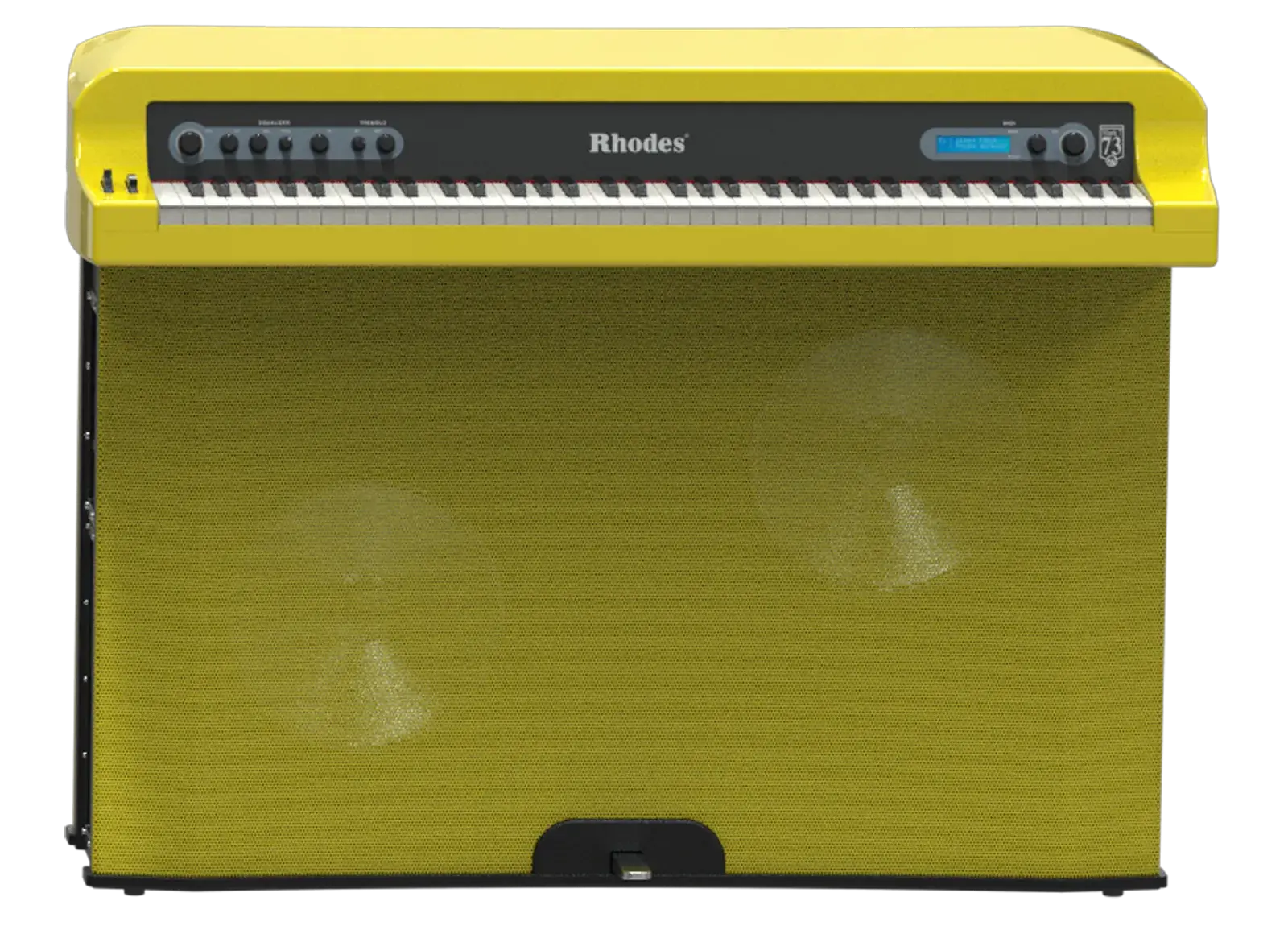 Rhodes Mark 7 AM 73Discontinued | 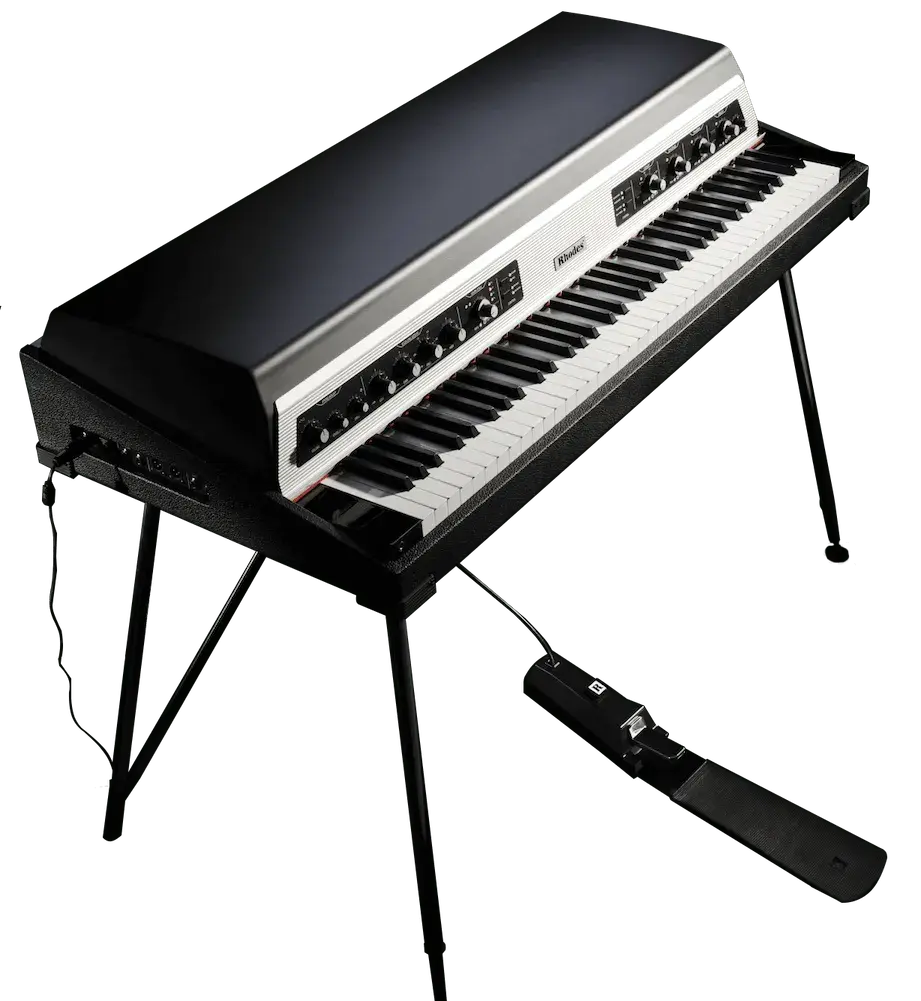 Rhodes MK8Current |
|---|---|---|
| General | ||
| Manufacturer | Rhodes | Rhodes |
| Status | Discontinued | Current |
| Released | 2007 | 2021 |
| Keyboard | ||
| Keys | 73 | 73 |
| Key action | Hammer-action | Hammer-action |
| Aftertouch | Polyphonic | None |
| Keybed | 73 wooden keys with Rhodes' patented key-sensing system for MIDI velocity and aftertouch (polyphonic and channel) | Rhodes custom spruce keys by Kluge Klaviaturen (Steinway group) on an oak and beech frame; ABS hammers with quad-zone tips |
| Sounds | ||
| Sections | Electric piano | Electric piano |
| Drawbars | None | None |
| Sound engine | Electromechanical: hammer-struck steel tines and tonebars read by electromagnetic pickups, into an active FET preamp | Electromechanical: hammer-struck steel tines and tonebars read by electromagnetic pickups (precision-wound alnico), into an analogue preamp |
| Organ models | None | None |
| Polyphony | Full polyphony (73 notes) | Full polyphony (73 notes) |
| Connections | ||
| Outputs | 1/4-inch unbalanced, XLR balanced, Headphones | 1/4-inch unbalanced, XLR balanced, Headphones |
| MIDI ports | DIN in, DIN out, DIN thru, USB | — |
| Pedal inputs | Sustain (mechanical) | Sustain (mechanical), Expression |
| Features | ||
| Features | Active preamp: lo/mid/hi EQ (+/-15dB), mid sweepable 100Hz-8kHz, Tremolo with speed and intensity, Pitch bend and mod wheels, 2 x 20 backlit LCD and encoder, Effects send and return, Continuous sustain pedal sensing, Also made as an 88 | Analogue preamp: volume, drive, envelope, Three-band EQ with sweepable resonant mid (wah), Vari-pan with four waveshapes and audio-rate modulation, Optional analogue FX: VCA compressor, phaser, BBD chorus, delay, Optional factory MIDI system: USB and DIN out, polyphonic aftertouch, Two expression/CV inputs (0-5V), FX send and return, direct pickup send, Twist-lock cable sustain pedal, External 15V power supply, Case design by Axel Hartmann, Built to order with custom finishes |
| Size & weight | ||
| Colours | Black, Red, White | Black, Gold Sparkle, Silver Sparkle, Smoked, Violet, Baby Blue, Pink, Mint Turquoise, Khaki, Traffic White, Red, Orange, Warm Grey |
| Dimensions (W × D × H) | — | 1153 × 563 × 225 mm |
| Weight | — | 34 kg |