
Moog DFAMvsMoog Minitaur
Summary
Moog DFAM and Moog Minitaur: 2 Moog synth onlys compared side by side. They differ on 8 of 15 compared specifications.
| 2 items | Moog DFAMCurrentView details → | Moog MinitaurCurrentView details → |
|---|---|---|
| General | ||
| Manufacturer | Moog | Moog |
| Status | Current | Current |
| Released | 2018 | 2012 |
| Sound engine | ||
| Engine | Analogue | Analogue |
| Voices | 1 | 1 |
| Polyphony | Monophonic (percussion) | Monophonic |
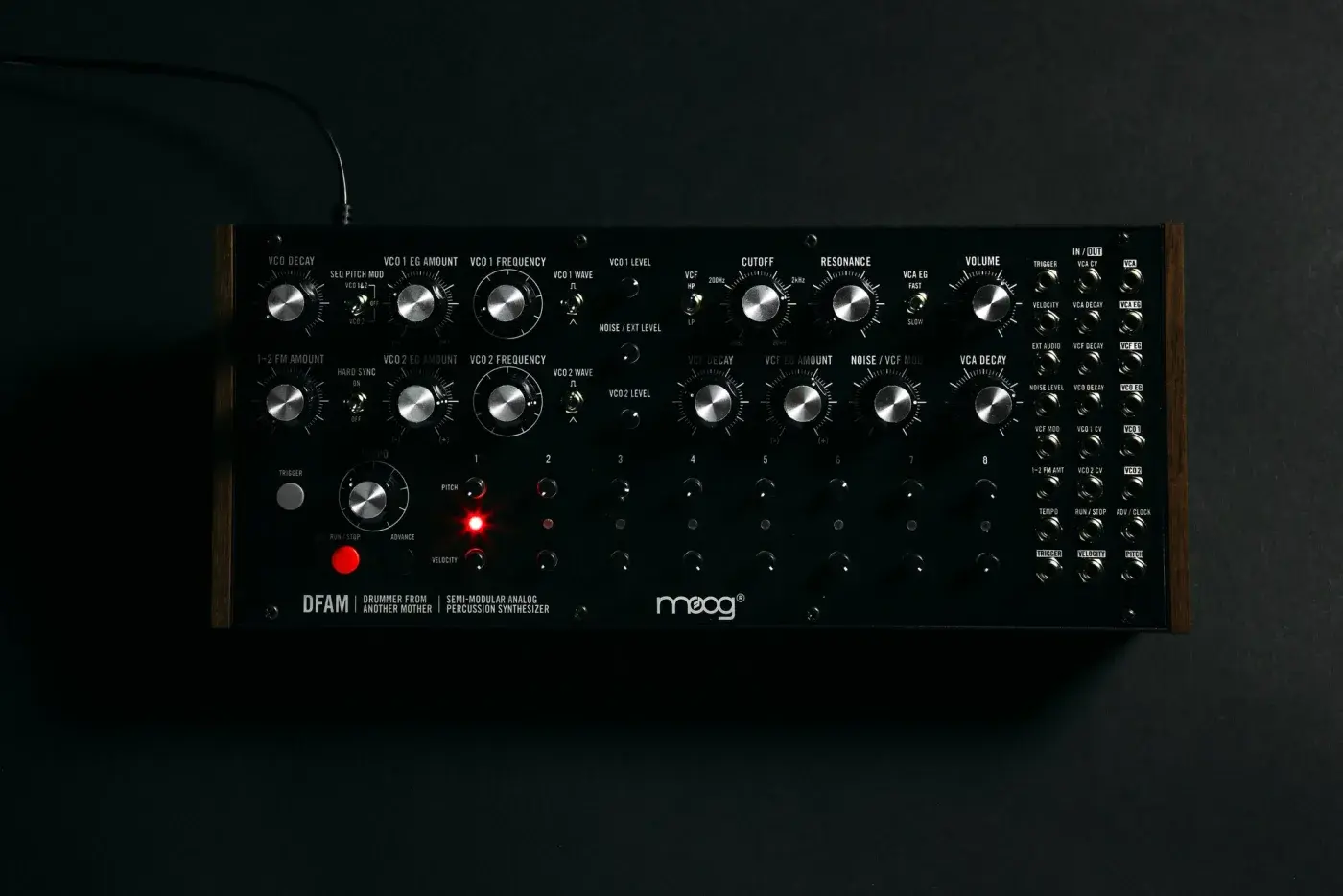
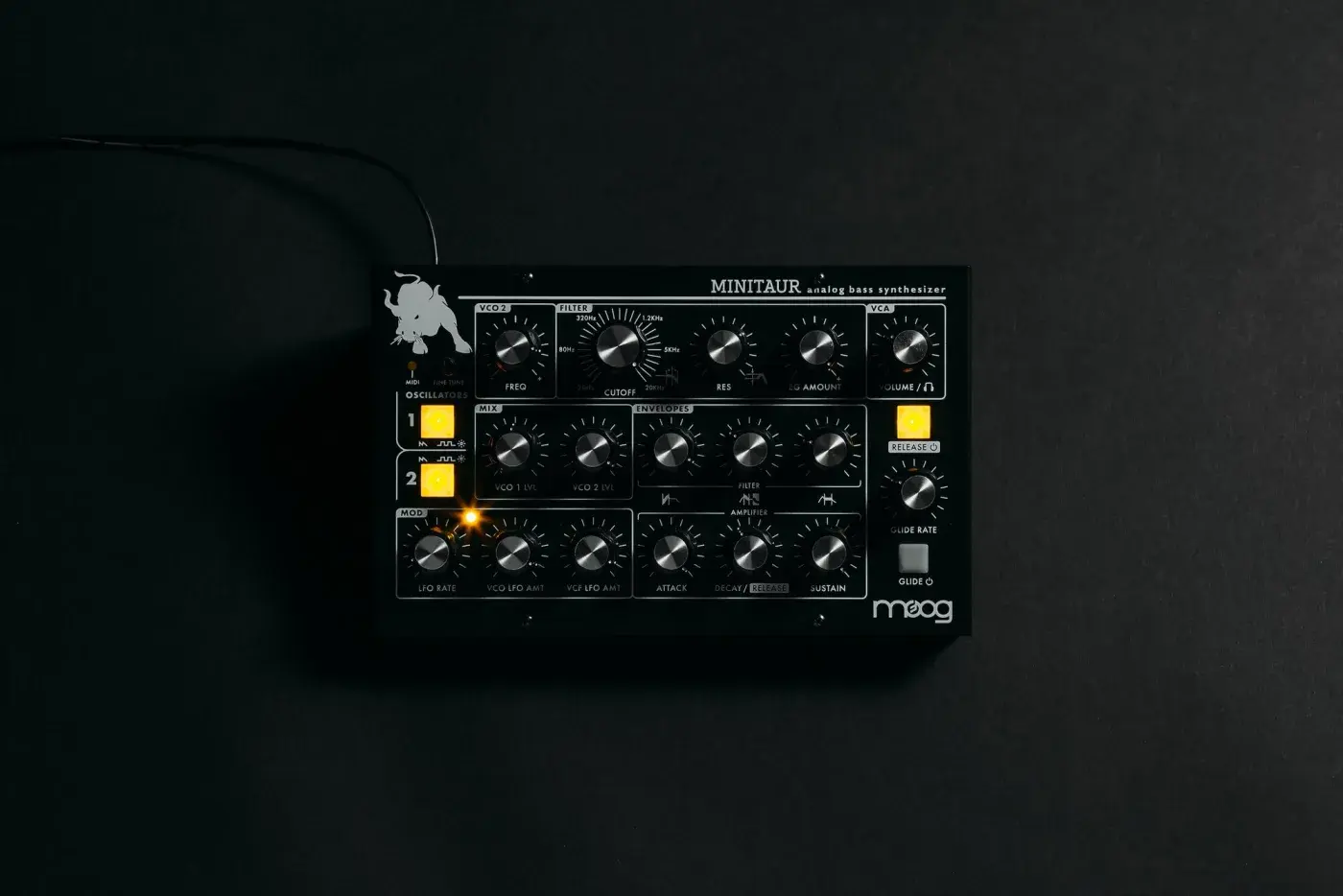
| Oscillators | 2 analogue VCOs (square and triangle), white noise, external audio input | 2 VCOs (saw and square) with hard sync |
| Filter | 4-pole transistor ladder, switchable low-pass/high-pass | Moog ladder low-pass |
| Multi-timbral parts | 1 | 1 |
| Sequencer | 8-step analogue sequencer with pitch and velocity per step | None |
| Keyboard | ||
| Keys | 0 | 0 |
| Format | ||
| Format | Desktop module | Desktop module |
| Motorised knobs | No | No |
| Features | 24-point patch bay, Percussion-focused envelopes, Syncs with Mother-32 and other DFAMs, Eurorack mountable (60HP), Patch cables included | 128 presets, Taurus-style bass voice, 2 ADSR envelopes, MIDI-syncable LFO, Pitch, filter, volume CV and gate inputs, External audio input |
| Connections | ||
| MIDI ports | — | DIN in, USB |
| CV / Gate | Yes | Yes |
| Size & weight | ||
| Dimensions (W × D × H) | 319 × 133 × 107 mm | 222 × 130 × 79 mm |
| Weight | 1.59 kg | 1.2 kg |
Key differences
- Released: DFAM – 2018 Minitaur – 2012
- Polyphony: DFAM – Monophonic (percussion) Minitaur – Monophonic
- Oscillators: DFAM – 2 analogue VCOs (square and triangle), white noise, external audio input Minitaur – 2 VCOs (saw and square) with hard sync
- Filter: DFAM – 4-pole transistor ladder, switchable low-pass/high-pass Minitaur – Moog ladder low-pass
- Sequencer: DFAM – 8-step analogue sequencer with pitch and velocity per step Minitaur – None
- Dimensions (W × D × H): DFAM – 319 × 133 × 107 mm Minitaur – 222 × 130 × 79 mm
Both are the same on engine (Analogue), voices (1) and keys (0).