
Rhodes Mark I Stage 73vsRhodes Mark II Stage 73
Summary
Rhodes Mark I Stage 73 and Rhodes Mark II Stage 73: 2 Rhodes electric pianos compared side by side. They differ on 3 of 12 compared specifications.
Key differences
- Released: 1970 on the Mark I Stage 73 and 1979 on the Mark II Stage 73.
- Keybed: 73 wooden keys; wood-and-plastic hammers to 1976, all-plastic after, neoprene tips from 1971 on the Mark I Stage 73 and 73 keys: wooden at first, plastic keys introduced in 1980 on the Mark II Stage 73.
Both are the same on tone source (Tines), keys (73) and key action (Hammer-action).
| 2 items | 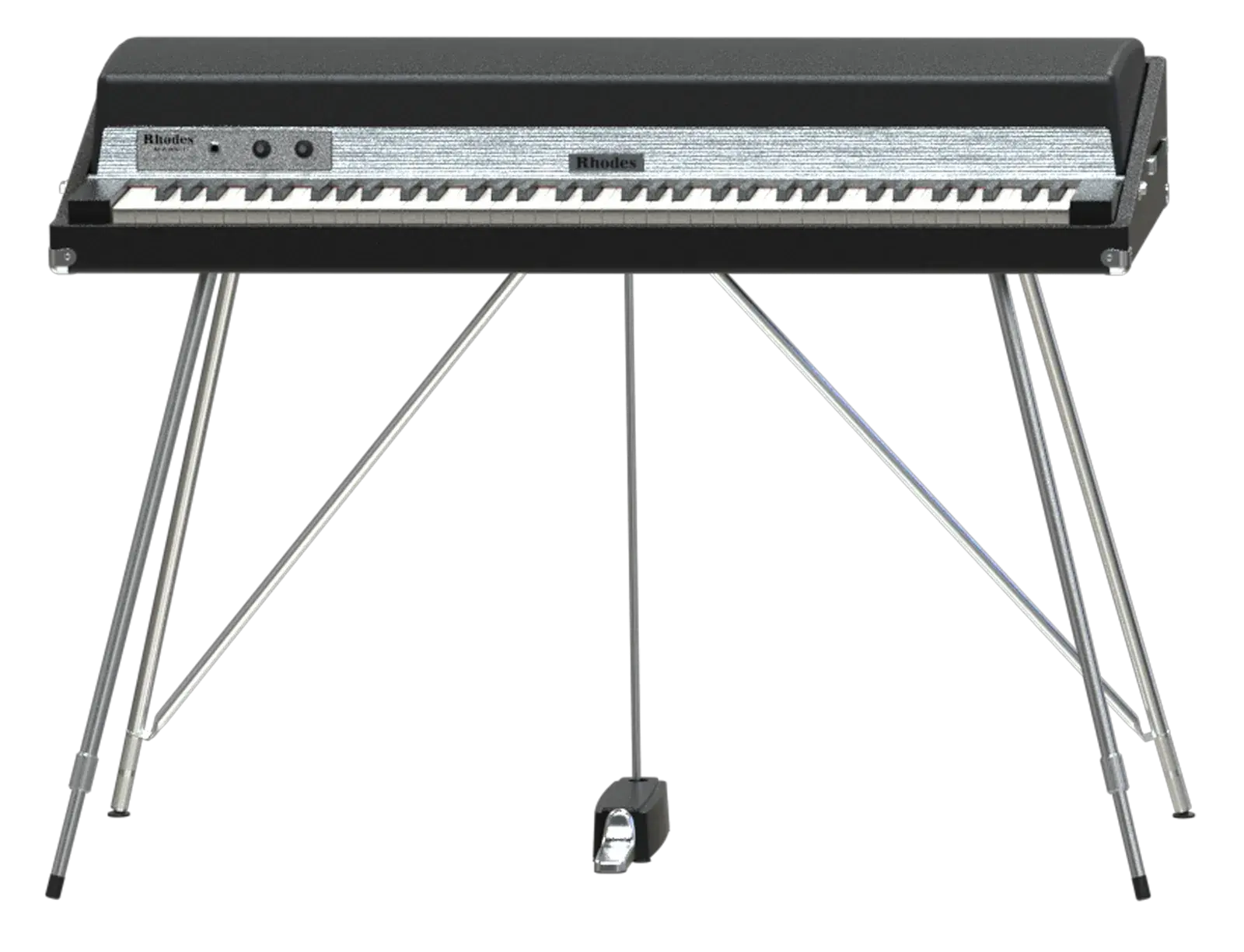 Rhodes Mark I Stage 73Discontinued 1979 | 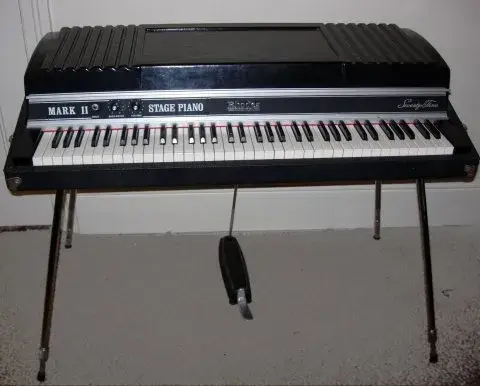 Rhodes Mark II Stage 73Discontinued |
|---|---|---|
| General | ||
| Manufacturer | Rhodes | Rhodes |
| Status | Discontinued | Discontinued |
| Released | 1970 | 1979 |
| Keyboard | ||
| Keys | 73 | 73 |
| Key action | Hammer-action | Hammer-action |
| Aftertouch | None | None |
| Keybed | 73 wooden keys; wood-and-plastic hammers to 1976, all-plastic after, neoprene tips from 1971 | 73 keys: wooden at first, plastic keys introduced in 1980 |
| Sound | ||
| Tone source | Tines | Tines |
| Sound engine | Electromechanical: hammer-struck steel tines and tonebars read by electromagnetic pickups; passive, needs an external amplifier | Electromechanical: hammer-struck steel tines and tonebars read by electromagnetic pickups; passive, needs an external amplifier |
| Polyphony | Full polyphony (73 notes) | Full polyphony (73 notes) |
| Features | Passive, no power needed, Volume and bass boost controls, Detachable legs, Sustain pedal with push rod, Fender branding dropped around 1974-75 | Flat lid for stacking another keyboard, Volume and bass boost controls, Passive, no power needed, Detachable legs |
| Connections | ||
| Outputs | 1/4-inch unbalanced | 1/4-inch unbalanced |
| Pedal inputs | Sustain (mechanical) | Sustain (mechanical) |
| Size & weight | ||
| Colours | Black | Black |
| Weight | 59 kg | — |