
Kurzweil MPS-M1vsKurzweil PC4
Summary
Kurzweil MPS-M1 and Kurzweil PC4: 2 Kurzweil multi-function keyboards compared side by side. They differ on 9 of 14 compared specifications.
Key differences
- Drawbars: None on the MPS-M1 and Physical on the PC4.
- Released: 2023 on the MPS-M1 and 2019 on the PC4.
- Aftertouch: None on the MPS-M1 and Monophonic on the PC4.
- Keybed: 88-note fully weighted hammer action (Fatar TP110), ten touch-sensitivity settings on the MPS-M1 and 88-note RPHA (Real Piano Hammer Action), fully weighted, velocity and aftertouch sensitive on the PC4.
- Sound engine: A.T.S.T. (Authentic Timbre Synthesis Technology): Kurzweil's sample-based engine for the piano and companion sounds on the MPS-M1 and Dynamic VAST: a programmable synthesis engine where each layer is a chain of DSP blocks you can rewire, with a 6-operator FM engine and the VA1 virtual-analogue oscillators alongside it, plus the KB3 tonewheel organ engine and gigabytes of factory samples. 2 GB of factory samples plus 2 GB of user flash. on the PC4.
- Organ models: None on the MPS-M1 and KB3 tonewheel modelling on the PC4.
Both are the same on keys (88) and key action (Hammer-action).
| 2 items | 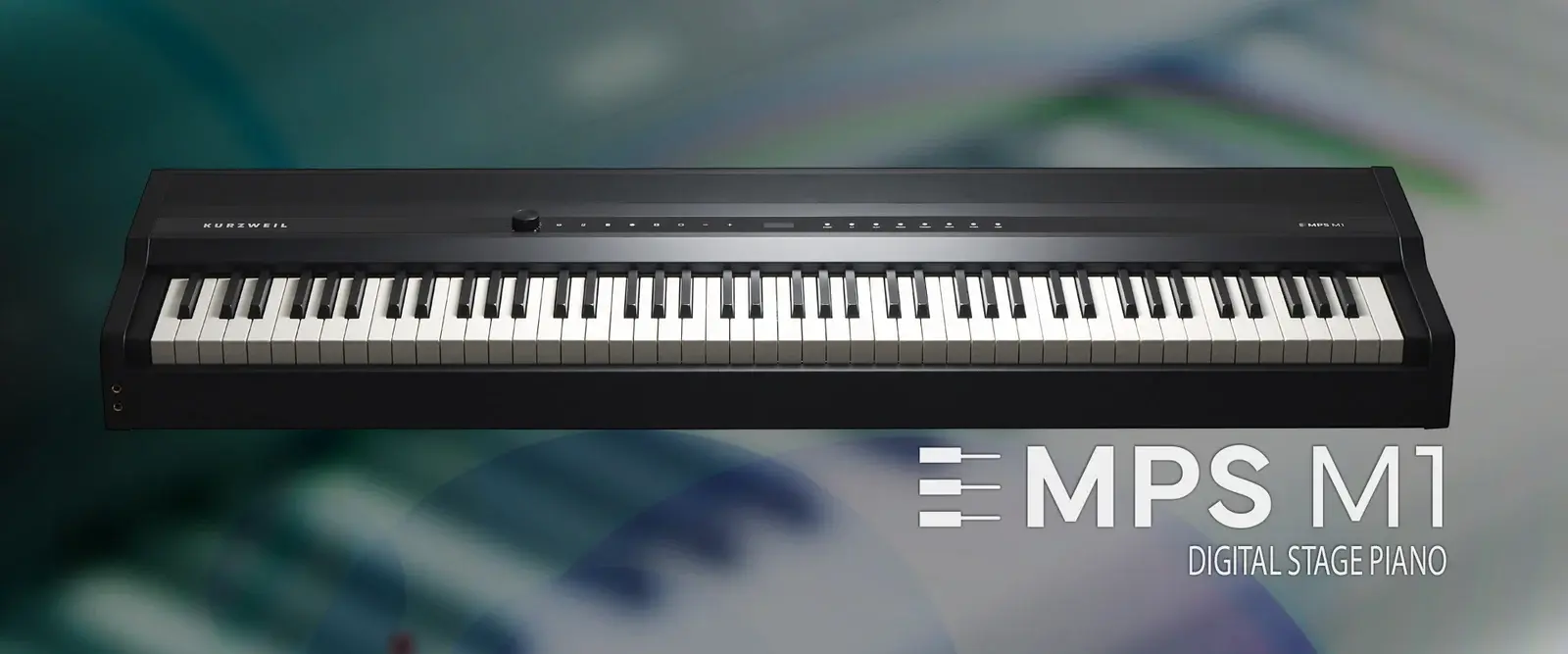 Kurzweil MPS-M1Current | 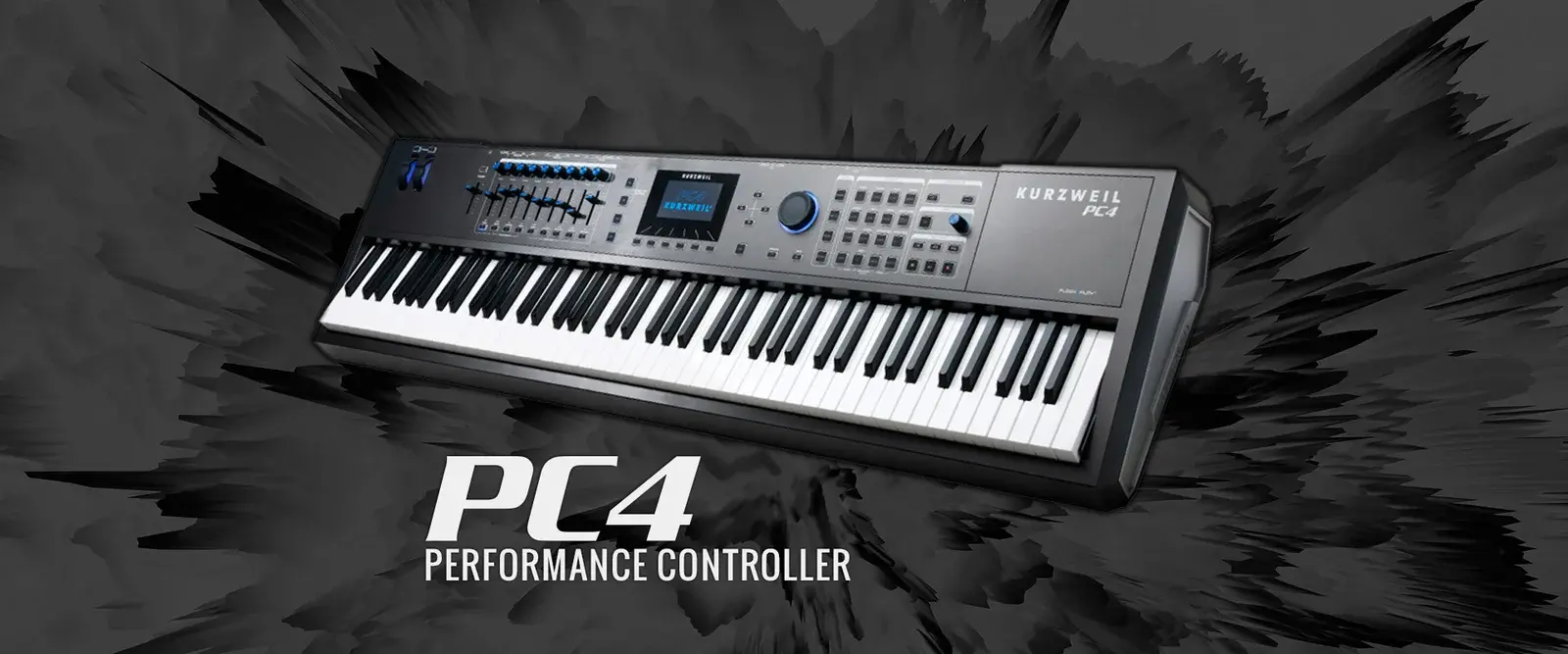 Kurzweil PC4Current |
|---|---|---|
| General | ||
| Manufacturer | Kurzweil | Kurzweil |
| Status | Current | Current |
| Released | 2023 | 2019 |
| Keyboard | ||
| Keys | 88 | 88 |
| Key action | Hammer-action | Hammer-action |
| Aftertouch | None | Monophonic |
| Keybed | 88-note fully weighted hammer action (Fatar TP110), ten touch-sensitivity settings | 88-note RPHA (Real Piano Hammer Action), fully weighted, velocity and aftertouch sensitive |
| Sounds | ||
| Sections | Piano, Electric piano, Synth, Sample playback | Piano, Electric piano, Organ, Synth, Sample playback |
| Drawbars | None | Physical |
| Sound engine | A.T.S.T. (Authentic Timbre Synthesis Technology): Kurzweil's sample-based engine for the piano and companion sounds | Dynamic VAST: a programmable synthesis engine where each layer is a chain of DSP blocks you can rewire, with a 6-operator FM engine and the VA1 virtual-analogue oscillators alongside it, plus the KB3 tonewheel organ engine and gigabytes of factory samples. 2 GB of factory samples plus 2 GB of user flash. |
| Organ models | None | KB3 tonewheel modelling |
| Polyphony | 256 notes | 256 notes, dynamically allocated |
| Connections | ||
| Outputs | 1/4-inch balanced, Headphones | 1/4-inch balanced, Headphones |
| MIDI ports | DIN in, DIN out, USB | DIN in, DIN out, USB |
| Pedal inputs | Sustain, Expression | Sustain, Expression |
| Features | ||
| Features | A.T.S.T. sound engine, Fatar TP110 hammer action, Ten touch-sensitivity settings, OLED display | Dynamic VAST with user-programmable DSP, Cascade Mode, up to 32 layers deep, 6-operator FM engine, VA1 virtual-analogue oscillators, KB3 tonewheel organ with nine sliders as drawbars, 1,000+ factory programs, 4,096 user, 16-part multitimbral, 32 effect units |