
Arturia ARP 2600 V3vsArturia DX7 V
Summary
Arturia ARP 2600 V3 and Arturia DX7 V: 2 Arturia software synths compared side by side. They differ on 9 of 11 compared specifications.
Key differences
- Synth type: Analogue modelling on the ARP 2600 V3 and Digital (FM) on the DX7 V.
- Released: 2016 on the ARP 2600 V3 and 2017 on the DX7 V.
- Emulates: ARP 2600 (1971) on the ARP 2600 V3 and Yamaha DX7 (1983) on the DX7 V.
- Polyphony: 2 to 32 voices, with unison on the ARP 2600 V3 and 32 voices on the DX7 V.
- Oscillators: 3 VCOs, noise, ring modulator, sample and hold on the ARP 2600 V3 and 6 operators, 32 algorithms, 25 waveforms per operator on the DX7 V.
- Filter: 24 dB resonant low-pass plus ARP 2500 12 dB multimode on the ARP 2600 V3 and Multimode filter per operator on the DX7 V.
Both are the same on voices (32) and plugin formats (VST2, VST3, AU, AAX).
| 2 items | 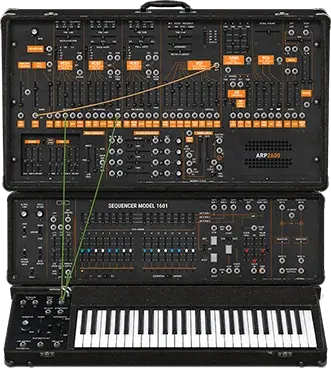 Arturia ARP 2600 V3Current | 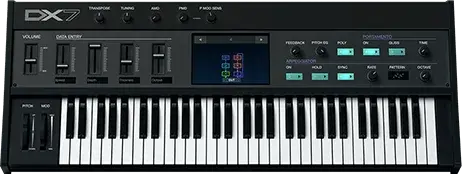 Arturia DX7 VCurrent |
|---|---|---|
| General | ||
| Manufacturer | Arturia | Arturia |
| Status | Current | Current |
| Released | 2016 | 2017 |
| Engine | ||
| Synth type | Analogue modelling | Digital (FM) |
| Emulates | ARP 2600 (1971) | Yamaha DX7 (1983) |
| Voices | 32 | 32 |
| Polyphony | 2 to 32 voices, with unison | 32 voices |
| Oscillators | 3 VCOs, noise, ring modulator, sample and hold | 6 operators, 32 algorithms, 25 waveforms per operator |
| Filter | 24 dB resonant low-pass plus ARP 2500 12 dB multimode | Multimode filter per operator |
| Sequencer | Modelled ARP 1601 step sequencer | Step sequencer |
| Effects | Chorus, Delay, Reverb | Insert effects |
| Software | ||
| Plugin formats | VST2, VST3, AU, AAX | VST2, VST3, AU, AAX |
| Features | ||
| Features | Semi-modular patching, Standalone app, NKS | DX7 SysEx import, Arpeggiator, Standalone app, NKS |