
Arturia CS-80 V4vsArturia DX7 V
Summary
Arturia CS-80 V4 and Arturia DX7 V: 2 Arturia software synths compared side by side. They differ on 6 of 7 compared specifications.
| 2 items | Arturia CS-80 V4CurrentView details → | Arturia DX7 VCurrentView details → |
|---|---|---|
| General | ||
| Manufacturer | Arturia | Arturia |
| Status | Current | Current |
| Released | 2022 | 2017 |
| Engine | ||
| Synth type | Analogue modelling | Digital (FM) |
| Emulates | Yamaha CS-80 (1977) | Yamaha DX7 (1983) |
| Voices | — | 32 |
| Polyphony | — | 32 voices |
| Oscillators | 2 parallel layers, each with its own VCO and PWM LFO, plus sub-oscillator | 6 operators, 32 algorithms, 25 waveforms per operator |
| Filter | High-pass and low-pass in series per layer, with envelopes | Multimode filter per operator |
| Sequencer | — | Step sequencer |
| Effects | — | Insert effects |
| Software | ||
| Plugin formats | VST2, VST3, AU, AAX | VST2, VST3, AU, AAX |
| Features | ||
| Features | Ribbon controller, Velocity and aftertouch per layer, MTS-ESP microtuning, Standalone app, NKS | DX7 SysEx import, Arpeggiator, Standalone app, NKS |
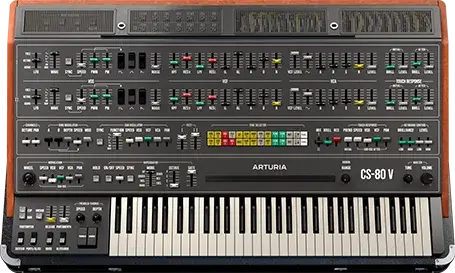
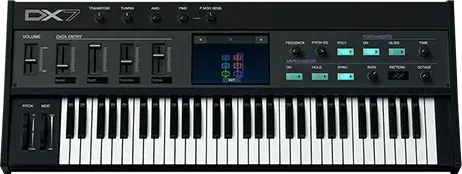
Key differences
- Synth type: CS-80 V4 – Analogue modelling DX7 V – Digital (FM)
- Released: CS-80 V4 – 2022 DX7 V – 2017
- Emulates: CS-80 V4 – Yamaha CS-80 (1977) DX7 V – Yamaha DX7 (1983)
- Oscillators: CS-80 V4 – 2 parallel layers, each with its own VCO and PWM LFO, plus sub-oscillator DX7 V – 6 operators, 32 algorithms, 25 waveforms per operator
- Filter: CS-80 V4 – High-pass and low-pass in series per layer, with envelopes DX7 V – Multimode filter per operator
Both are the same on plugin formats (VST2, VST3, AU, AAX).