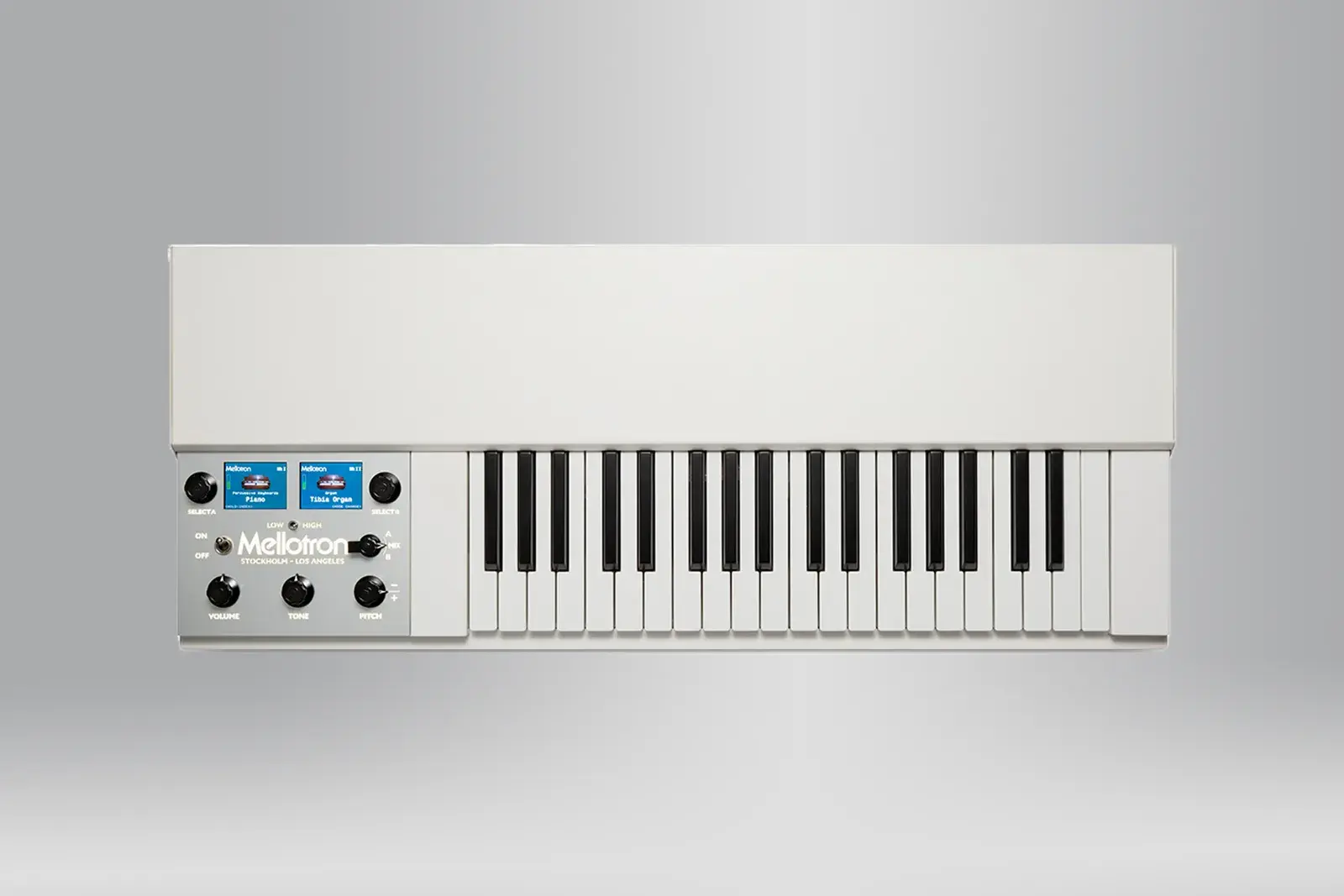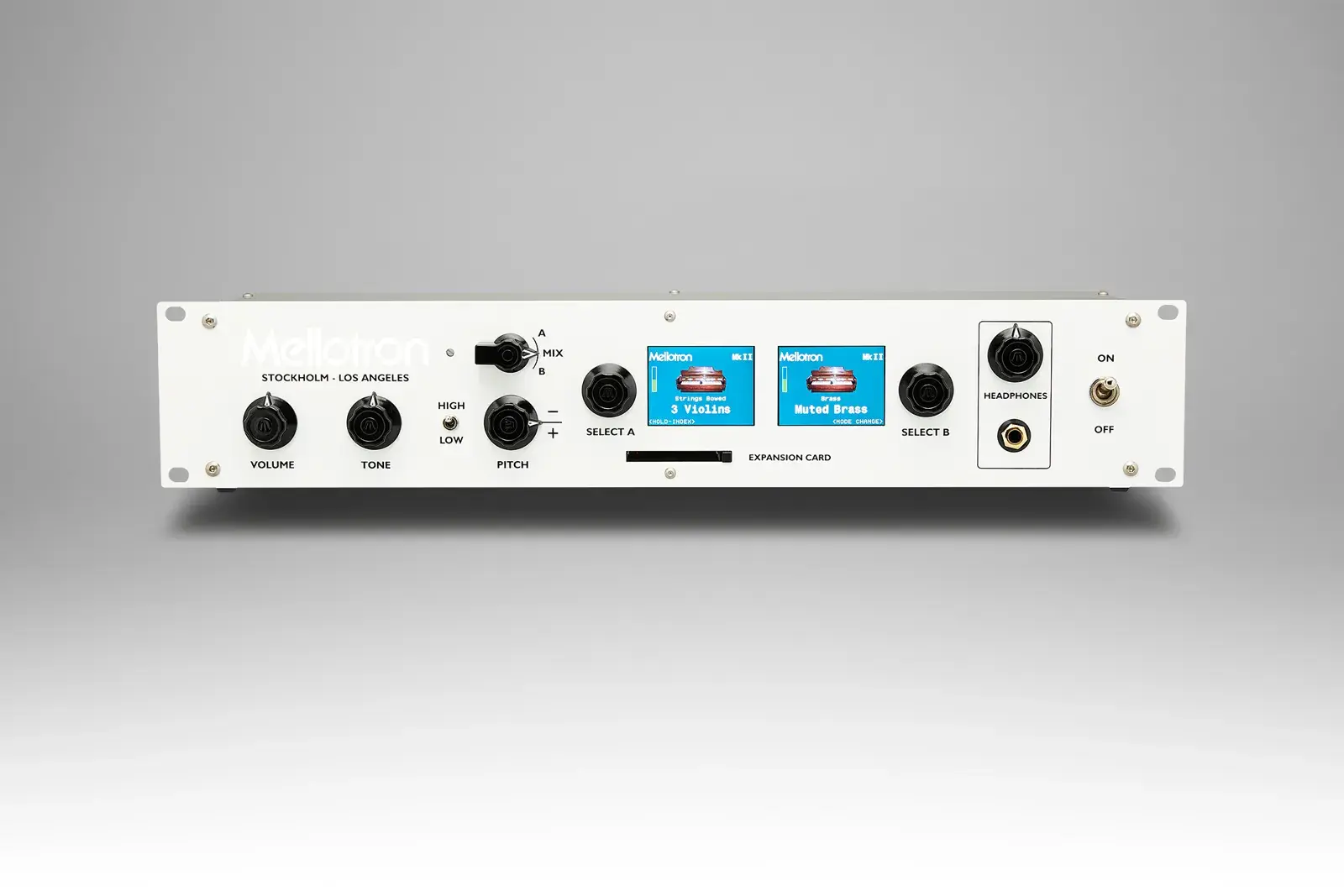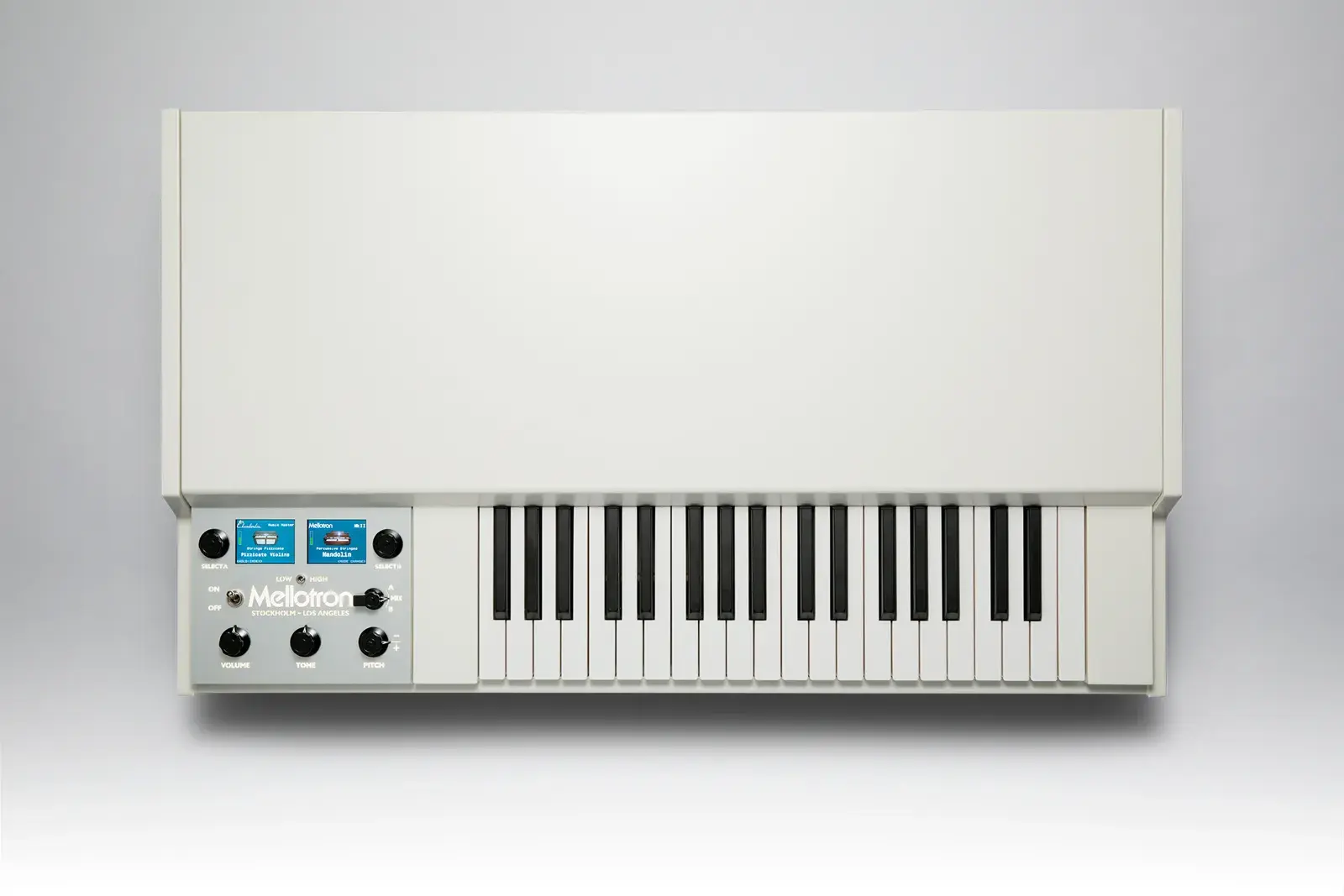
John Lennon's Mk II at the Rock and Roll Hall of Fame. Photo: Zurich_99, CC BY-SA 2.0, via Wikimedia Commons.

Mellotron Mk II
Discontinued 1968Released 1964
The 160 kg double-manual cabinet behind the 1960s Mellotron sound. It has 18 lead sounds on the right manual and rhythm and accompaniment loops on the left, plus a valve preamp, spring reverb and built-in speakers. It sounds warmer and softer than an M400, so prog bands often loaded the left manual with extra lead sounds. Genesis did this for the 'Watcher of the Skies' intro.
Specifications
General
- Manufacturer
- Mellotron
- Status
- Discontinued
- Released
- 1964
Keyboard
- Keys
- 70
- Aftertouch
- None
- Keybed
- Two 35-note manuals, G to F; left manual split into rhythm (keys 1-17) and accompaniment (18-35)
Sounds
- Sections
- Sample playback
- Drawbars
- None
- Sound engine
- Tape replay: 3/8-inch three-track tapes, six stations of three sounds per manual (A, B, C or A+B / B+C blends), about 8 seconds per note
- Organ models
- None
- Polyphony
- Full polyphony (70 notes)
Connections
- Outputs
- Built-in speakers
Features
- Features
- Tape replay, Pitch control, Two manuals, Two 12-inch speakers, Valve preamp, Spring reverb, Motor-driven station changing
Size & weight
- Colours
- Mahogany
- Dimensions (W × D × H)
- 1295 × 685 × 990 mm
- Weight
- 159 kg
Heard on
Artists and records that used it, as Mellotron tells it.
- The Beatles, “Strawberry Fields Forever” – the flute intro, on John Lennon's Mk II
- The Moody Blues, “Nights in White Satin” – Mike Pinder's strings
- Genesis, “Watcher of the Skies” – the unaccompanied strings-and-brass intro