
History
The Rhodes story: from a hospital bed to the MK8
How a piano teacher's lap instrument for wounded airmen became the electric piano on half the records of the 1970s, lost its name, got it back and came home as the MK8: every Rhodes model in order, how the tines make the sound, and where to hear it.
Updated 2 October 2026Electric PianosSoftware SynthsCases & Covers
Every Rhodes is, at heart, a teaching aid. Harold Rhodes ran piano schools in Los Angeles from the age of 20, and the instrument that carries his name began as a way of getting a keyboard into places a piano could not go: first a hospital ward, then a classroom, then the back of a band's van. That it ended up defining the sound of jazz fusion, soul and soft rock was nobody's plan.
This is the story in order, model by model. Where a model is in the catalogue it is linked under its entry, and the instruments and software Rhodes makes today are at the bottom. If you want to learn to pick a Rhodes out by ear first, Is it a Rhodes? does that.
Before Fender (1942–1958)
1942
Army Air Corps lap piano
Harold Rhodes · Acoustic, metal bars
- 29 notes
- Aluminium tubing from B-17 bombers
- Played in bed
What it brought: A keyboard you could play lying down. Teaching recovering airmen for the US Army Air Corps, Rhodes built a small xylophone-like piano from aircraft tubing that sat across a hospital bed, sometimes called the Xylette. Rhodes's own history dates the programme to 1942 and puts the number made at around 125,000; other accounts date the lap piano itself to 1945.
1946
Pre-Piano
Rhodes Piano Corporation · Electric, amplified
- 38 notes
- Built-in amplifier
- Sold to schools
What it brought: The first electric Rhodes. Back in civilian life, Harold set up his own company and turned the idea into a small amplified piano for homes and schools, with its tines made by a doorbell manufacturer. Accounts differ on the launch, from 1946 to a public sale in 1948, but it is the instrument every later Rhodes grew from.
Fender and CBS (1959–1983)
In 1959 Leo Fender took an interest, and the Fender Rhodes was born. Six years later CBS bought Fender, and with it Rhodes, which put a corporation's money behind the piano and built it in numbers: Rhodes reckons around a quarter of a million were made in the CBS years.
1962
Fender Rhodes Piano Bass
Fender Rhodes · Electric, tine
- 32 notes
- Bass range only
- Developed from 1959
What it brought: The first Fender Rhodes, and the first to use the tine and tone-bar mechanism in production: just the bottom 32 notes, built to stand in for a bass player. Ray Manzarek played the Doors' bass lines on one.
In the catalogue: Rhodes Piano Bass
1965
Fender Rhodes Electric Piano 73
Fender Rhodes (CBS) · Electric, tine
- 73 notes
- Piano on an amplifier base
- Sparkle-finish lid
What it brought: The full-size Rhodes, the year CBS bought Fender: a 73-note piano sitting on its own amplifier and speaker cabinet. The early 'Sparkletop' pianos, with felt hammer tips, have a woody, bell-like tone that is the sound of Miles Davis's turn to electric instruments.
In the catalogue: Rhodes Electric Piano 73 (Sparkletop), Rhodes Mark I Suitcase 73
1970
Stage Piano
Fender Rhodes (CBS) · Electric, tine, passive
- 73 or 88 notes
- No amplifier
- Four screw-in legs
What it brought: The Rhodes most people picture: the piano without its speaker cabinet, on legs, with one jack out to whatever amp the band had. Passive, so it needs no power at all. An 88-note version followed (1970 or 1971, depending on the source), and the Suitcase carried on beside it for players who wanted the built-in stereo tremolo.
In the catalogue: Rhodes Mark I Stage 73, Rhodes Mark I Stage 88, Rhodes Mark I Suitcase 88
1979
Mark II
Rhodes (CBS) · Electric, tine
- 54, 73 or 88 notes
- Flat lid
- All-black trim
What it brought: A restyle more than a redesign. CBS had dropped 'Fender' from the name in 1974; the Mark II gave the late Mark I a flat lid you could stack a synth on, black trim and, from around 1980, plastic keys that Harold disliked. A cut-down 54-note Stage arrived for players who only needed the middle of the keyboard.
In the catalogue: Rhodes Mark II Stage 73, Rhodes Mark II Stage 88, Rhodes Mark II Stage 54, Rhodes Mark II Suitcase 73
1980
Mark III EK-10
Rhodes (CBS) · Electric, tine + analogue synth
- 73 notes
- Rhodes and synth together
What it brought: CBS's answer to the polysynth: a Stage with analogue synth circuitry added, so you hear tines and a synth at once. It was unreliable and few sold.
In the catalogue: Rhodes Mark III EK-10
1982
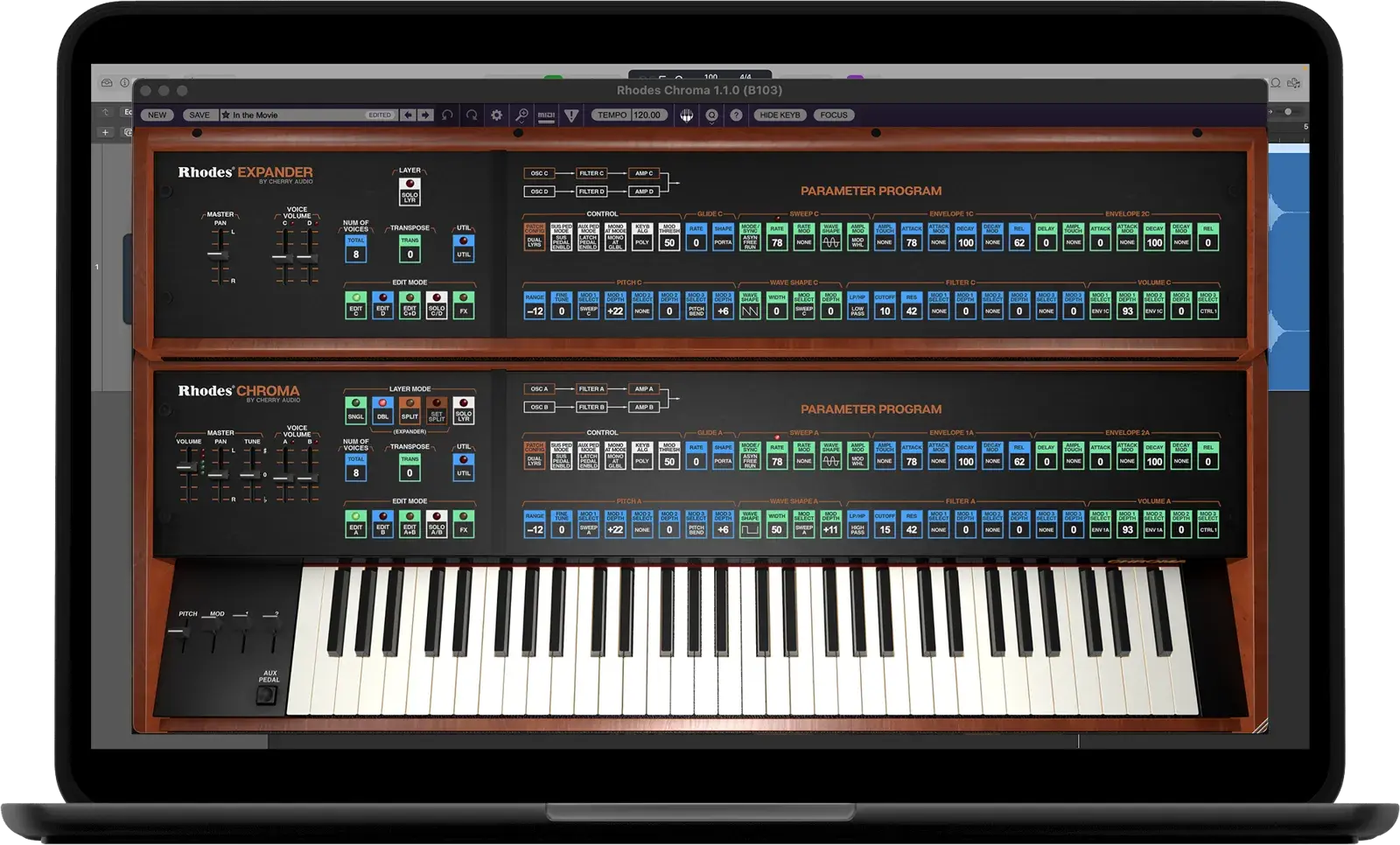
Chroma
Rhodes (CBS) · Analogue polysynth
- ARP's last design
- Microprocessor-controlled
- Weighted wooden keys
What it brought: Not a piano at all. When ARP went under, CBS rescued its final design and sold it as a Rhodes, which is why the most sophisticated analogue polysynth of its day carries a piano maker's badge. The cheaper Chroma Polaris followed in 1984.
In the catalogue: Rhodes Chroma, Rhodes Chroma Polaris, Rhodes Chroma (plugin)
Losing the name (1983–2000)
In 1983 CBS sold Rhodes to Bill Schultz, who ran its musical instrument business, as part of selling off Fender. The original company made one more piano before the factory closed.
1984
Mark V
Rhodes · Electric, tine
- 73 notes
- Moulded plastic body
- Lighter, more dynamic action
What it brought: Harold's last and, for many players, best: a lighter body, wooden keys again and an action with longer hammer travel and more dynamic range. Only a few thousand were made, so they are scarce. Chick Corea had one converted to MIDI.
In the catalogue: Rhodes Mark V Stage 73
1989
MK-80 and MK-60
Roland · Digital piano
- Sampled, no tines
- Rhodes badge
What it brought: Roland bought the Rhodes name in 1987 and put it on digital pianos without asking Harold, who said hearing one made him feel sick. Decent instruments of their time, but no tines inside, and the reason the name meant little for a decade.
In the catalogue: Rhodes MK-80, Rhodes MK-60
With the help of Joe Brandstetter, Harold got the name back in 1997, the year he was honoured by the Recording Academy. He died in December 2000, aged 89.
The revival (2007–now)
2007
Mark 7
Rhodes Music Corporation · Electric, tine
- 73 notes
- Moulded shell
- Passive, active or MIDI
What it brought: The first new tine Rhodes in more than 20 years, from Joe Brandstetter's revived company: a Mark V-style action in a curvy moulded shell, with a version that sent MIDI. Built in small numbers for a few years.
In the catalogue: Rhodes Mark 7 73, Rhodes Mark 7 AM 73
2021
MK8
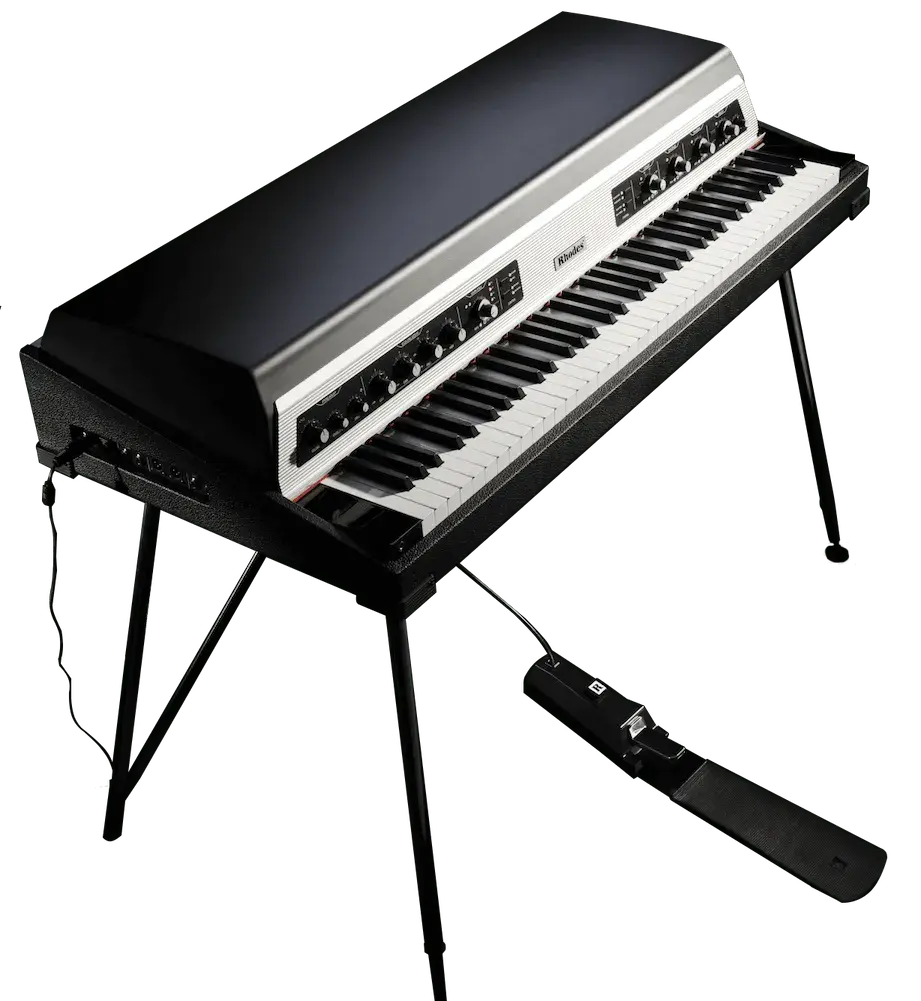
Rhodes Music Group · Electric, tine
- 73 notes
- Built in the UK
- Kluge keyboard
- Optional FX and MIDI
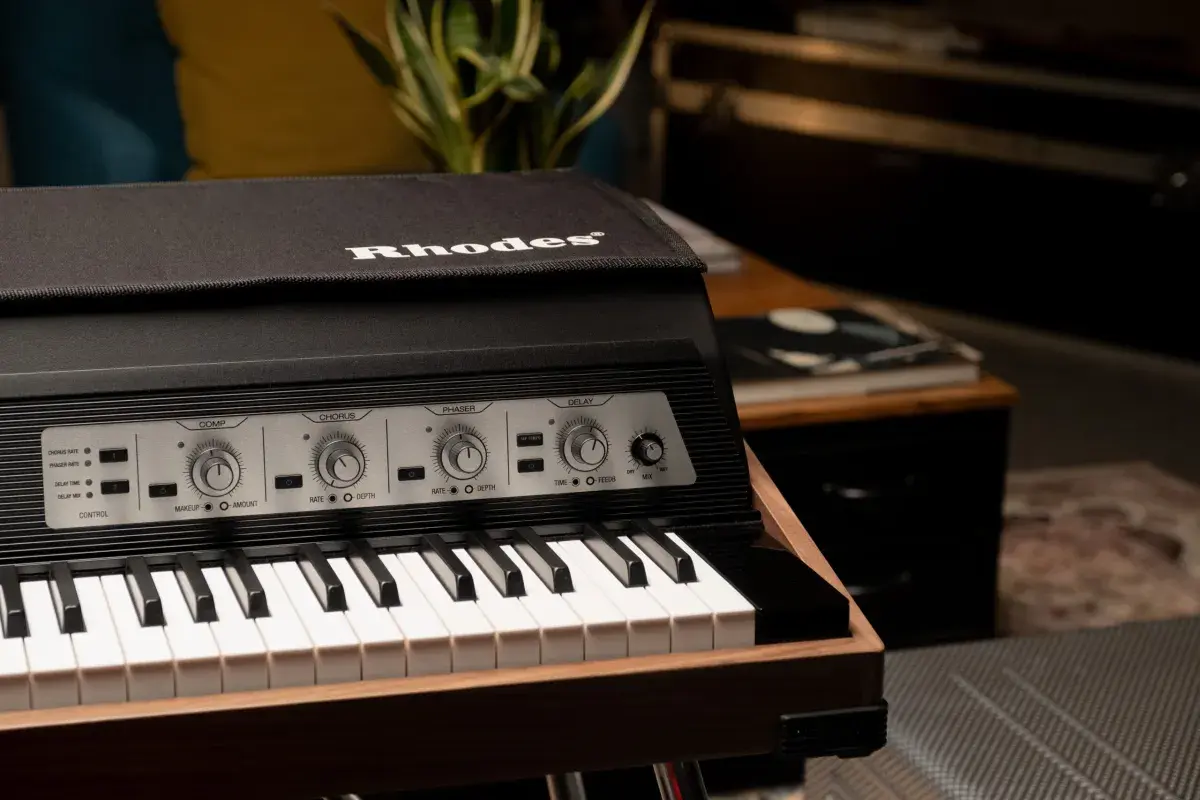
What it brought: The relaunch. A new UK company licensed the name in 2021 and unveiled the MK8 that October: new tines, pickups and hammer tips, a case by Axel Hartmann, a preamp with EQ, auto-wah and stereo tremolo, and optional effects and MIDI boards. It shipped in 2022, and at 34 kg it is the lightest full-size tine Rhodes yet.
In the catalogue: Rhodes MK8
2023
V8 and V8 Pro
Rhodes Music Group · Software
- Sampled from the MK8
- Plug-in
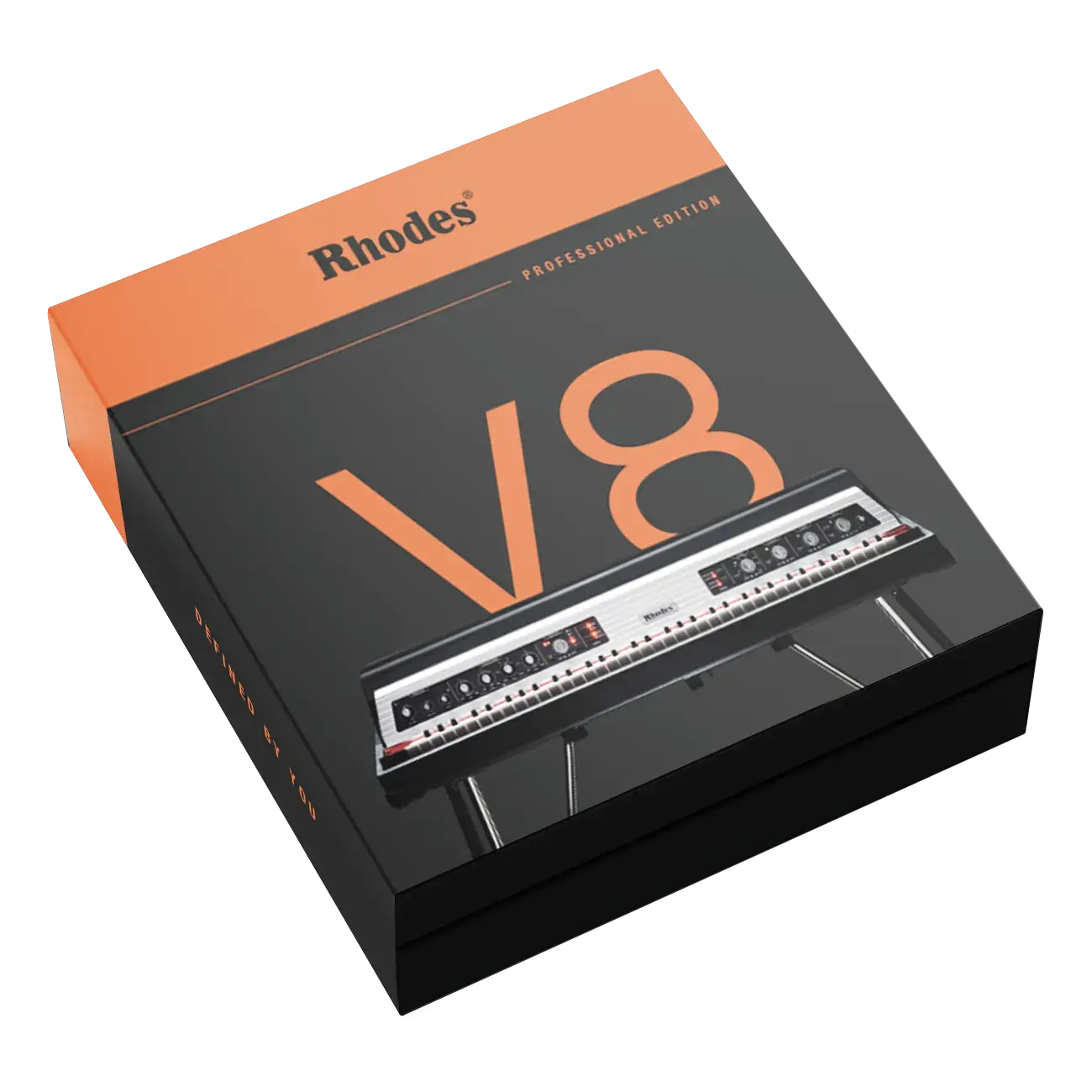
What it brought: The MK8 as a plug-in, sampled by Rhodes itself, with the Pro version adding the FX board and per-note voicing. It was followed by Anthology, four vintage pianos from a 1965 Sparkletop to a Mark 7.
In the catalogue: Rhodes V8 Pro, Rhodes V8, Rhodes Anthology
2025
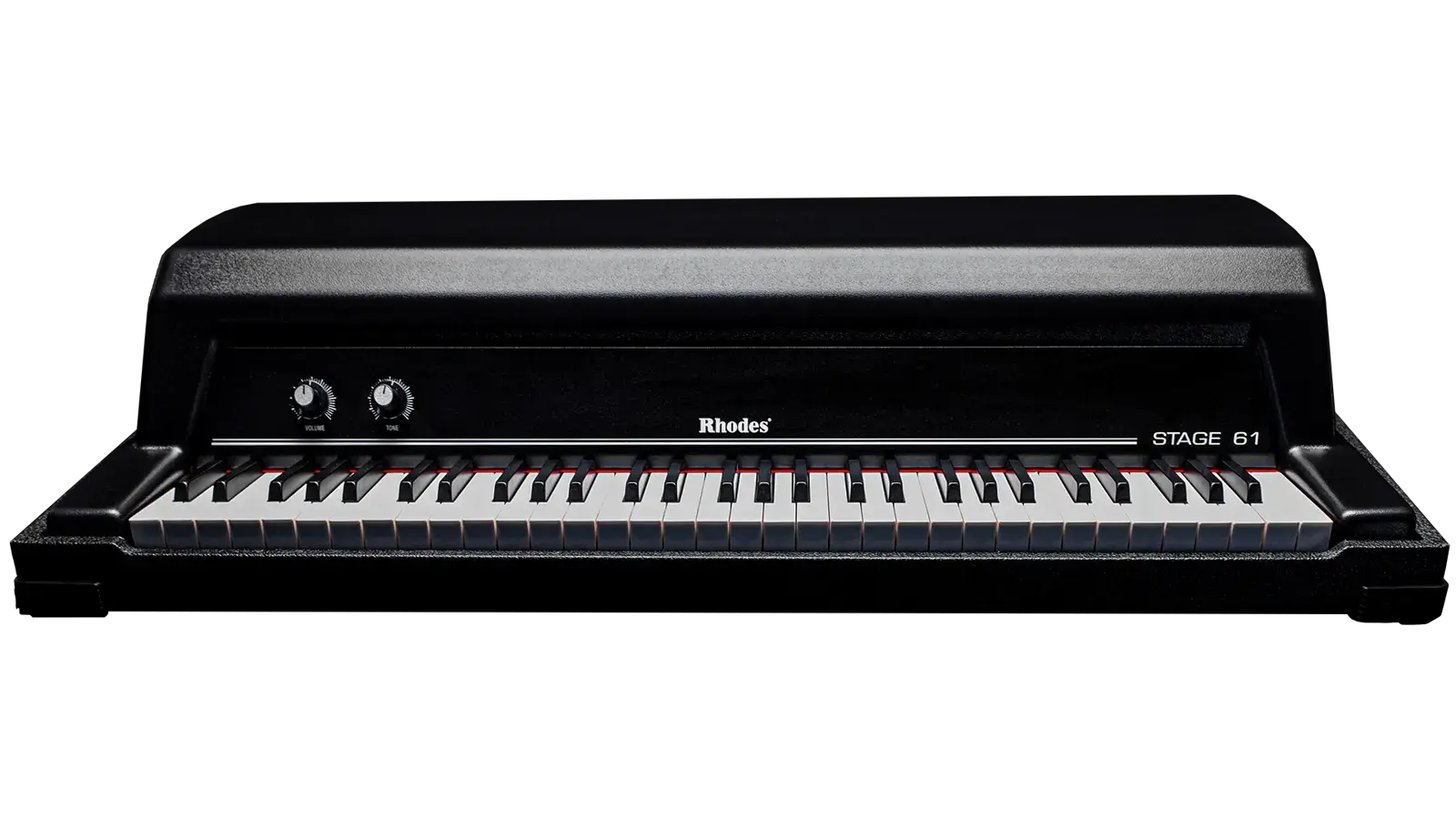
Stage 61
Rhodes Music Group · Electric, tine, passive
- 61 notes
- Passive
- 26 kg
What it brought: Back to basics: MK8 tines and action in a passive Stage-style case with only volume and tone, light enough for one person to carry to a gig.
In the catalogue: Rhodes Stage 61
How a Rhodes makes its sound
There are no strings. Each key throws a hammer at a thin steel rod called a tine, which is one arm of a lopsided tuning fork; the heavier arm, the tone bar, keeps it ringing. A pickup beside each tine turns the vibration into a signal, much as a guitar pickup does with a string.
- Tuning: a small spring on each tine slides along it like a counterweight. Rhodes pianos hold their tuning far better than string pianos.
- Bark and bell: how close a tine sits to its pickup sets the character. Closer gives more growl when you dig in, further away a cleaner bell.
- Hammer tips: felt on the earliest pianos, graded neoprene from 1971 and plastic hammers from the mid-1970s, which is a large part of why Rhodes from different years sound different.
- Passive or active: a Stage needs no power at all to make a sound, only an amplifier to hear it. A Suitcase, a Mark 7 Active or an MK8 adds a preamp.
Where to hear it
- The Beatles, 'Get Back' (1969): Billy Preston on Fender Rhodes.
- The Doors, 'Riders on the Storm' (1971): Ray Manzarek.
- Stevie Wonder, 'You Are the Sunshine of My Life' (1973): Wonder himself.
- Herbie Hancock, Head Hunters (1973), 'Chameleon' especially.
- Billy Joel, 'Just the Way You Are' (1977).
- Bob James, 'Angela' (1978), the theme from Taxi.
Keeping one going
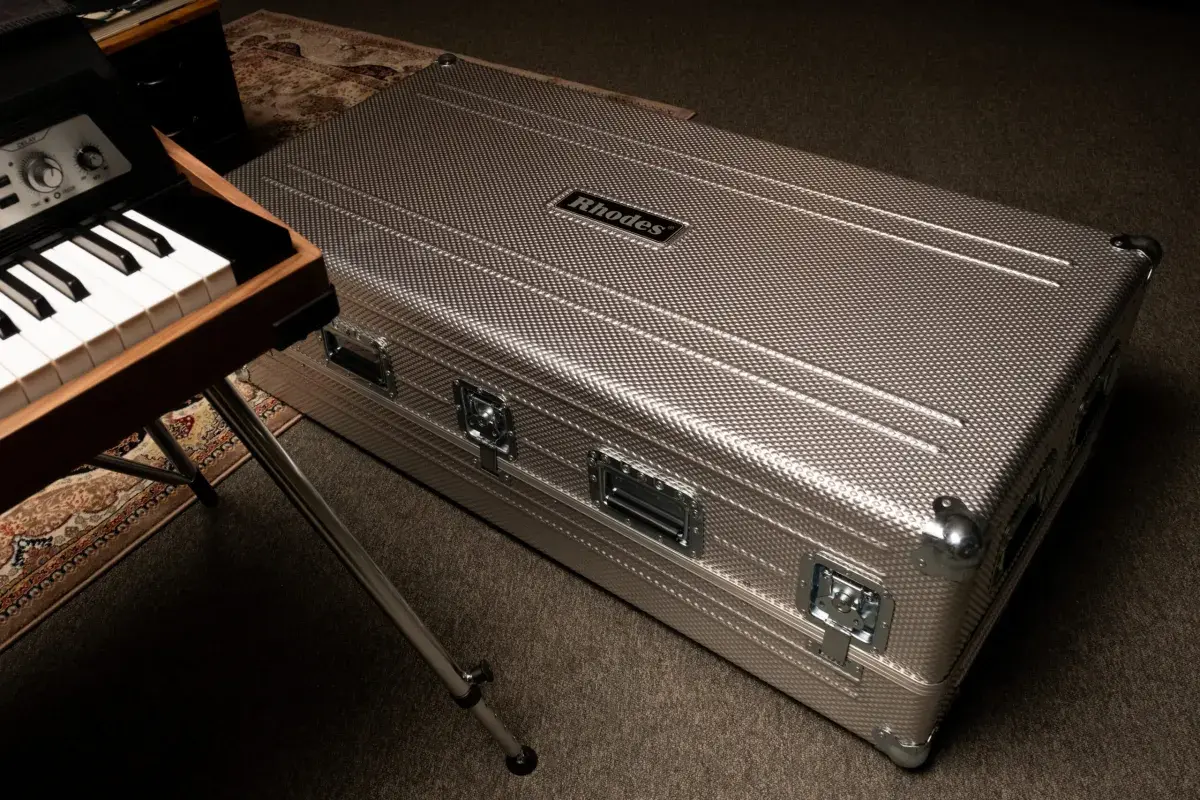
Because the design has barely changed since the 1960s, most parts still fit. Rhodes sells the common wear parts on its own website ↗: tines, hammer tips, damper felts, pickups, grommets and springs for every Rhodes and Fender Rhodes, plus a kit of the bits that go first. Its own covers, key cover, hood mat and MK8 flight case are in Cases & Covers.
Rhodes today
The pianos Rhodes builds now, and its own fitted protection:
Rhodes
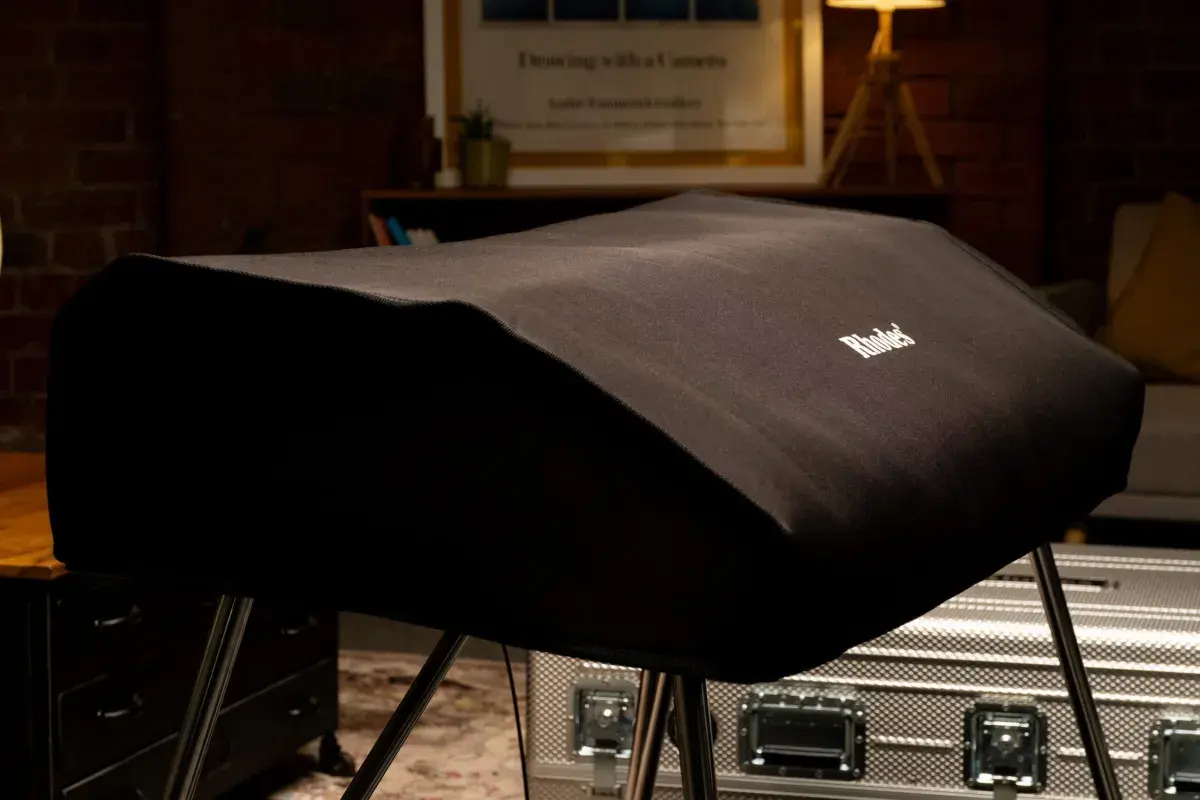
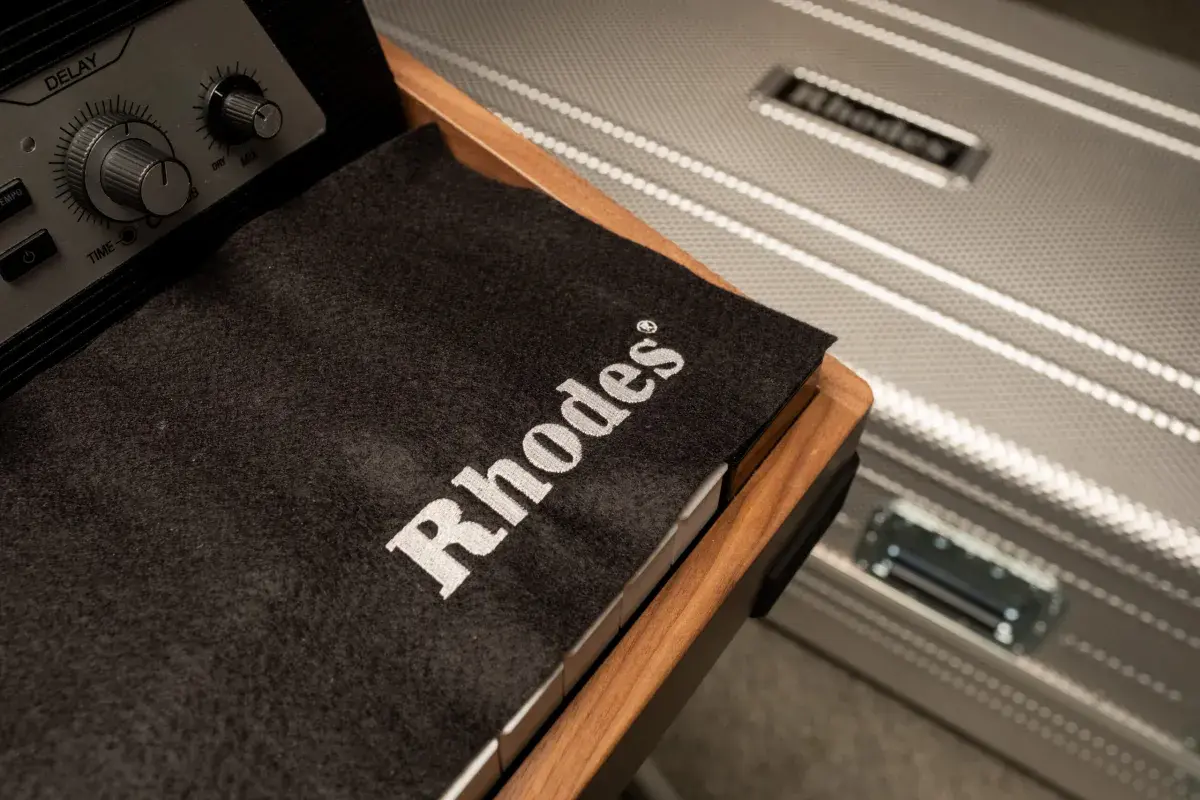
Drop-Over Cover
Current- Type
- Dust cover
- Fits
- Rhodes MK8; Mark I, Mark II, Mark III EK-10, Mark V and Mark 7 73-note
—
And the software, for the sound without the 34 kg:
Rhodes
V8 Pro
Current- Synth type
- Digital (sampling and modelling)
- Voices
- —
- Plugin formats
- VST2, VST3, AU, AAX
—2023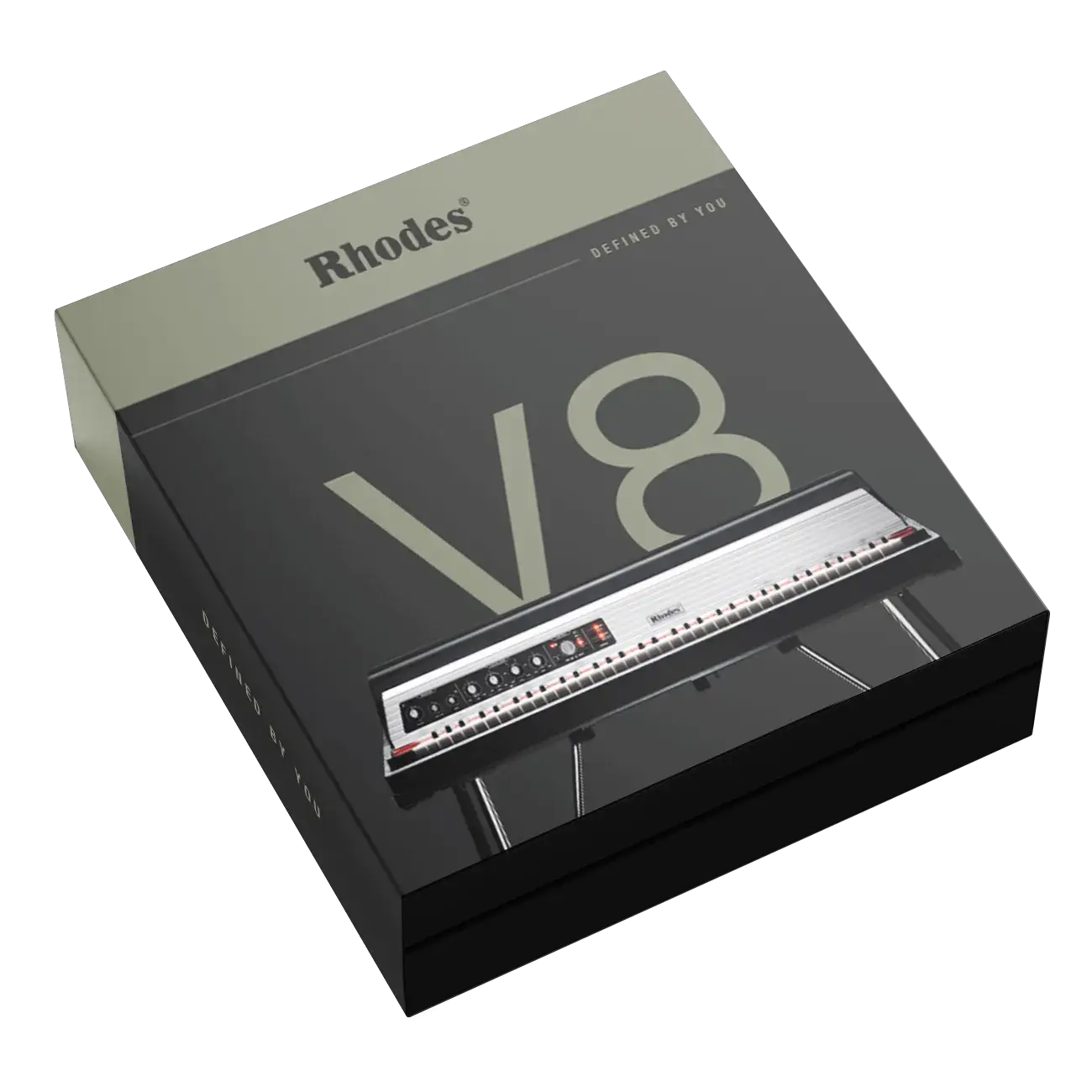
Rhodes
V8
Current- Synth type
- Digital (sampling and modelling)
- Voices
- —
- Plugin formats
- VST2, VST3, AU, AAX
—2023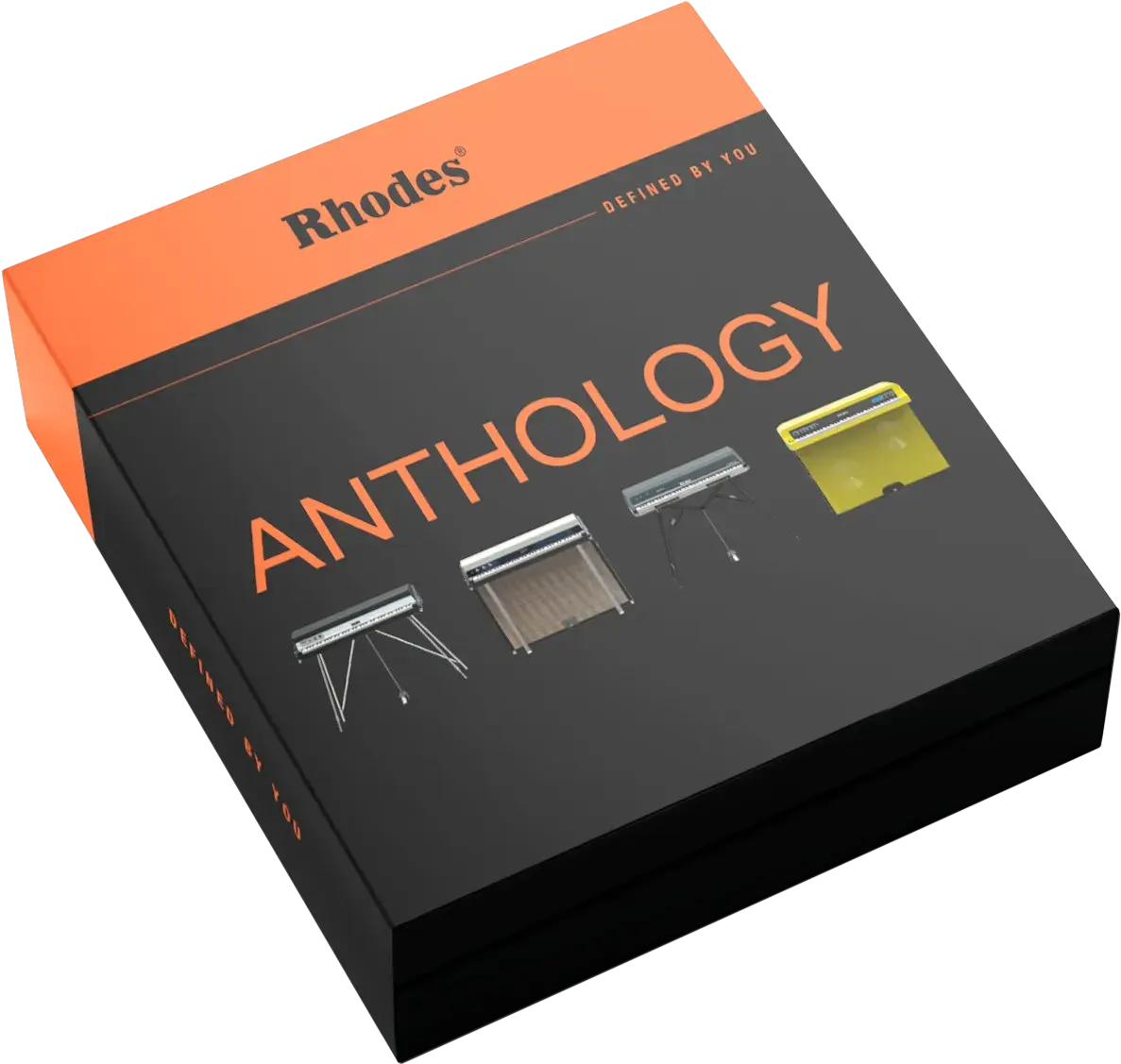
Rhodes
Chroma (plugin)
Current- Synth type
- Analogue modelling
- Voices
- 16
- Plugin formats
- VST2, VST3, AU, AAX, Standalone
—2024
Sources
Where sources disagree on a date, the entry says so.
- The History of Rhodes ↗ (Rhodes): the company's own account, from the Army Air Corps to the MK8.
- Rhodes piano ↗ and Harold Rhodes ↗) (Wikipedia): dates across every era, the mechanism and the records.
- Fender Rhodes history ↗ and the service manual ↗ (Fender Rhodes Super Site): the Fender and CBS years, the Mark V and how the tines and tuning springs work.
- History of Rhodes pickups ↗ (Vintage Vibe): how the pickups changed by year.
- Rhodes MK8 unveiled ↗ and Rhodes unveil Stage 61 ↗ (Sound On Sound): the modern pianos.
- Rhodes relaunches as Rhodes Music Group ↗ (MusicTech): the 2021 relaunch.
- Rhodes official spares ↗ and accessories ↗ (Rhodes): parts, covers and cases.