
Instrument story
The DX7: the sound of the eighties
Yamaha's DX7 put FM synthesis into a keyboard most bands could afford in 1983, and its presets ended up on a remarkable share of the decade's hits. How it came about, why nobody could program it, and eleven records to hear it on.
Updated 12 October 2026Synth OnlySoftware Synths
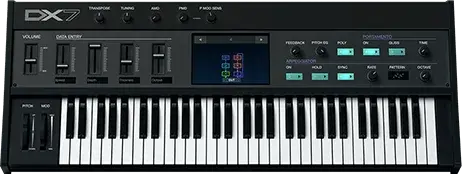
If you heard a pop record in the mid-1980s, you probably heard a DX7. The glassy electric piano on the ballads, the rubbery bass under the dance hits, the bells, the marimbas, the brass: a huge amount of that decade came out of one brown keyboard with a two-line screen and no knobs.
It arrived in May 1983 at $1,995 in the US and about £1,500 in the UK, cheap next to the digital synths of the day, and it sold in numbers nothing had come close to. Yamaha had hoped for 20,000; it is widely credited as the first synth to sell more than 100,000.
Where it came from
FM synthesis was discovered by John Chowning at Stanford in 1967. Stanford patented it and offered it around; the American organ makers turned it down, and Yamaha took a licence in the early 1970s and exclusive rights in 1975. Its first FM instrument, the GS1, needed around 50 chips. The DX7 did it with two custom ones, which is what made the price possible.
Each voice has six 'operators', simple sine-wave oscillators that modulate each other in one of 32 arrangements called algorithms. The result can be brighter, more metallic and more realistic on bells and electric pianos than anything a filter-based synth could manage, and it changes over each note the way a struck instrument does. There is a fuller explanation of how FM works in the synth history.
- 16 voices, 61 keys with velocity and aftertouch
- 6 operators, 32 algorithms, no filter and no effects
- 32 internal memories, plus cartridges
- MIDI in, out and thru, in MIDI's first year
The presets everyone used
The DX7 was edited one parameter at a time through a tiny screen, and FM is hard to predict: change one number and the whole sound can turn into something else. Most owners never tried. The 128 factory sounds, made by Dave Bristow and Gary Leuenberger in a matter of days, became the sound of the decade instead.
- E.PIANO 1: the ballad electric piano. The Economist estimated it was on 40 per cent of US number ones in 1986, and more of the country and R&B ones.
- BASS 1: the punchy synth bass under 'Fresh', 'Take On Me' and 'Danger Zone'.
- BASS 2: the pulsing riff of 'Take My Breath Away'.
- CALIOPE, KOTO and the marimbas: hooks on records by Tina Turner, Prince and Harold Faltermeyer.
Eleven records to hear it on
In date order. Every claim here is from the players, producers or a reliable source, and two famous records are here partly to set the record straight: the DX7 is on 'Take On Me' and 'Axel F', but it isn't the hook you are thinking of. Toto's 'Africa' and Chicago's 'Hard to Say I'm Sorry', often listed, came out before the DX7 did.
1983
'An Ending (Ascent)'
Brian Eno · Eno's own DX7 pad
- From Apollo
- Programmed, not a preset
The DX7 part: The proof that the DX7 was more than presets. Eno, who owned seven of them, programmed his own sounds rather than use the factory ones, and the slow, glowing pad here is one of his, later traced to a patch he published in Keyboard magazine in 1987.
Official upload from BrianEnoVEVO. Loads from YouTube when you press play, or watch it there ↗
In the catalogue: Yamaha reface DX, Arturia DX7 V
1983
'What Is Love?'
Howard Jones · Factory preset bass
- UK number 2
- Preset bass
The DX7 part: Howard Jones reckons this was the first big hit to really feature the DX7, and the bass is straight off the factory presets. He later admitted that using a preset was considered a cardinal sin among synth players; there simply was no time to program one.
Official upload from Howard Jones. Loads from YouTube when you press play, or watch it there ↗
In the catalogue: Yamaha reface DX, Arturia DX7 V
1984
'What's Love Got to Do with It'
Tina Turner · CALIOPE intro, BASS 1
- Almost all DX7
- Plus a LinnDrum and guitar
The DX7 part: Apart from the drum machine and guitar, nearly everything here is a DX7. The breathy, flute-like intro hook is usually identified as the CALIOPE preset and the bass as BASS 1, by people who know the factory sounds by ear rather than from studio notes.
Official upload from Tina Turner Videos. Loads from YouTube when you press play, or watch it there ↗
In the catalogue: Yamaha reface DX, Arturia DX7 V
1984
'When Doves Cry'
Prince and the Revolution · Main keyboard riff
- Reportedly the KOTO preset
- No bass line at all
The DX7 part: The famous record with no bass part leaves the keyboards fully exposed, and the stabbing main riff is a DX7, reportedly built on the KOTO preset. The solo is an Oberheim.
Official upload from Prince. Loads from YouTube when you press play, or watch it there ↗
In the catalogue: Yamaha reface DX, Arturia DX7 V
1984
'Fresh'
Kool & the Gang · BASS 1 bass line
- UK number 11
- US number 9
The DX7 part: BASS 1 again, the preset that turned up under half the decade. Here it carries the whole groove, played by the band's keyboard player Curtis Williams.
Official upload from KoolAndTheGangVEVO. Loads from YouTube when you press play, or watch it there ↗
In the catalogue: Yamaha reface DX, Arturia DX7 V
1985
'Axel F'
Harold Faltermeyer · The marimba
- From Beverly Hills Cop
- Not the lead
The DX7 part: Often credited to the DX7, but the famous lead is a Roland Jupiter-8, the bass a Moog modular and the stabs a Roland JX-3P. The DX7 plays the bright marimba, which Faltermeyer remembers being used for a scene in the film. Listen out for it in the second half.
Official upload from Harold Faltermeyer - Topic. Loads from YouTube when you press play, or watch it there ↗
In the catalogue: Yamaha reface DX, Arturia DX7 V
1985
'Take On Me'
a-ha · BASS 1 bass line
- The riff is a Juno-60
- DX7 underneath
The DX7 part: Another record the DX7 gets too much credit for. Producer Alan Tarney says the main riff is a Roland Juno-60; the DX7 is the bouncing BASS 1 bass line underneath it, with a DX7 lead reportedly doubled under the riff.
Official upload from a-ha. Loads from YouTube when you press play, or watch it there ↗
In the catalogue: Yamaha reface DX, Arturia DX7 V
1986
'Danger Zone'
Kenny Loggins · BASS 1 bass line
- From Top Gun
- Produced by Giorgio Moroder
The DX7 part: The driving eighth-note bass is BASS 1, the same preset as 'Fresh' and 'Take On Me', which tells you how many studios had the same keyboard and the same deadline.
Official upload from KennyLogginsVEVO. Loads from YouTube when you press play, or watch it there ↗
In the catalogue: Yamaha reface DX, Arturia DX7 V
1986
'Take My Breath Away'
Berlin · BASS 2 main riff
- From Top Gun
- Moroder's demo sound kept
The DX7 part: The pulsing bass riff is the BASS 2 preset. Giorgio Moroder's demo sound was good enough that it stayed on the finished record.
Official upload from BerlinVEVO. Loads from YouTube when you press play, or watch it there ↗
In the catalogue: Yamaha reface DX, Arturia DX7 V
1986
'The Final Countdown'
Europe · Brass layered from a TX816
- DX7 engine in a rack
- Plus a Roland JX-8P
The DX7 part: Strictly speaking not a DX7 keyboard: the brass riff layers a Roland JX-8P with a stock brass sound from a TX816, a rack of eight DX7 engines. The same FM chip, in a different box, on the most famous riff of 1986.
Official upload from EuropeVEVO. Loads from YouTube when you press play, or watch it there ↗
In the catalogue: Yamaha reface DX, Arturia DX7 V
1990
'Twin Peaks Theme'
Angelo Badalamenti · E.PIANO 1
- DX7 and TX7
- Grammy, 1991
The DX7 part: The definitive E.PIANO 1 record. Keyboardist Kinny Landrum says the electric piano sounds on the soundtrack were a DX7 and a TX7, and the slow, glassy chords are the factory preset most people mean when they say 'DX7'.
Official upload from Angelo Badalamenti - Topic. Loads from YouTube when you press play, or watch it there ↗
In the catalogue: Yamaha reface DX, Arturia DX7 V
Where FM went next
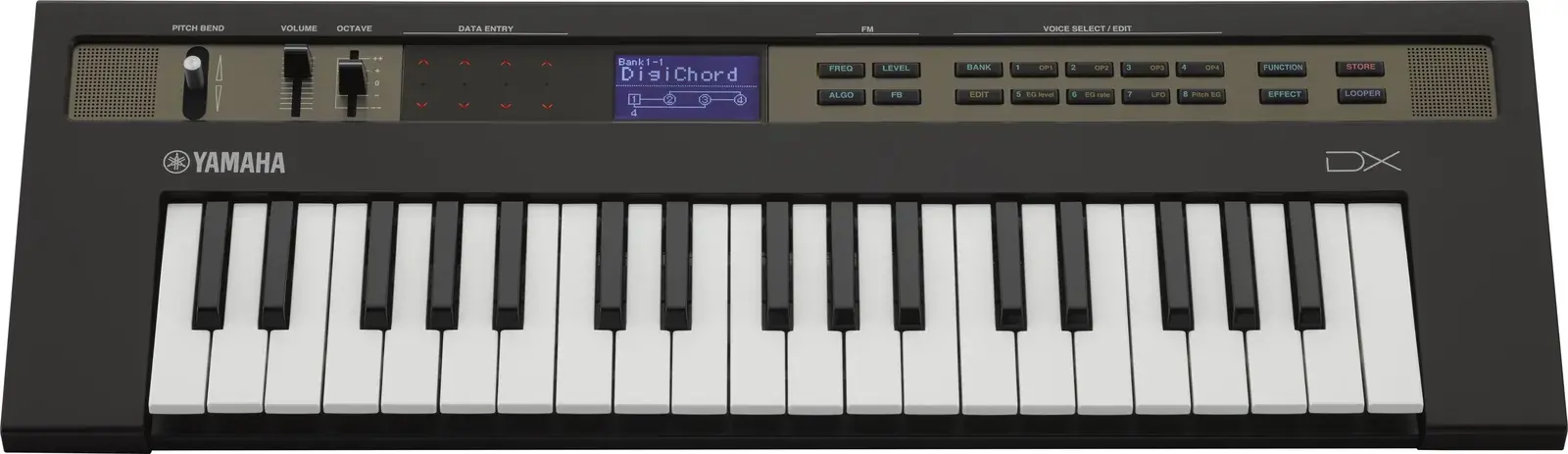
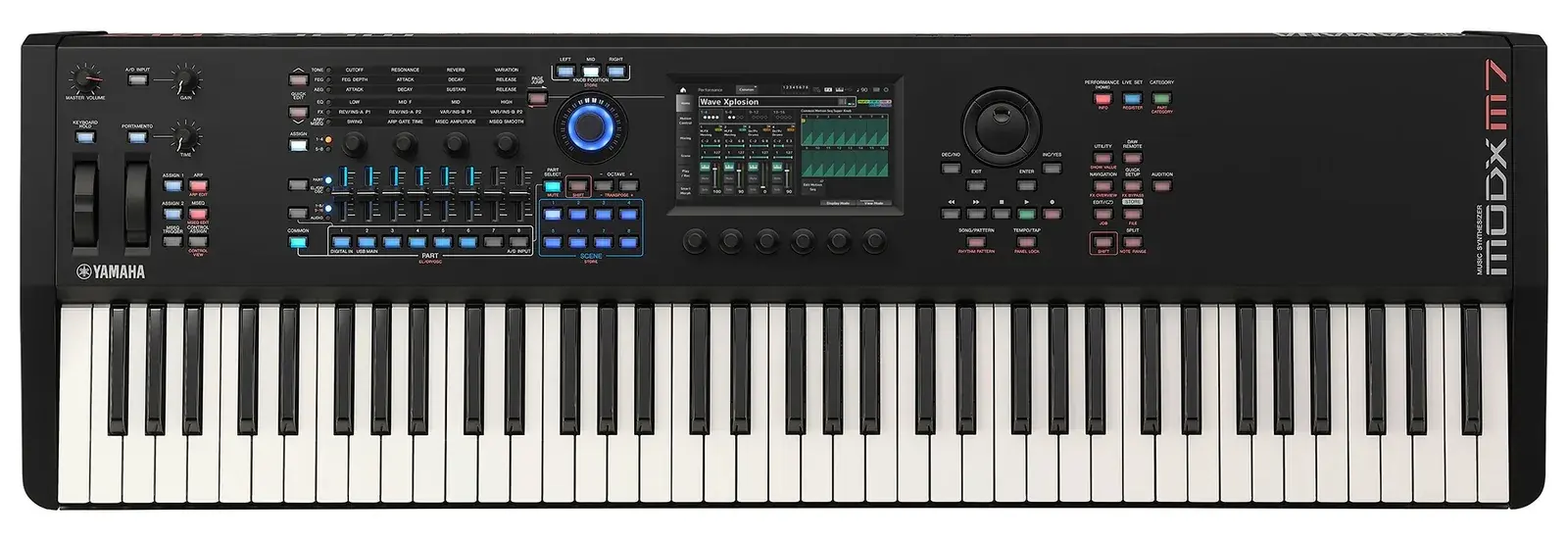
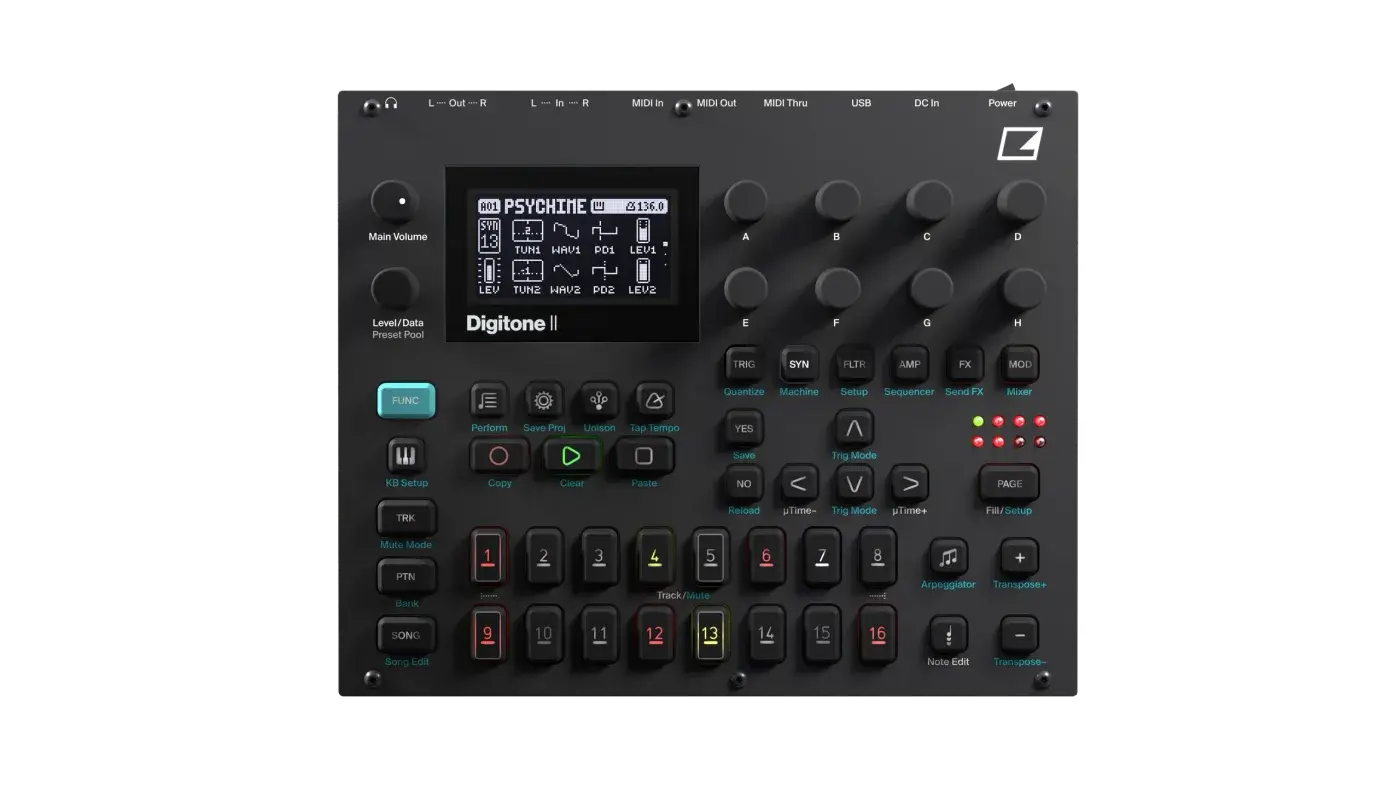
FM fell out of fashion when sample-based keyboards like the Korg M1 arrived, then came back once software made it easier to program. Yamaha's own MONTAGE and MODX carry an eight-operator version called FM-X, the reface DX is a four-operator one for the desktop, and the free Dexed plug-in loads original DX7 patches. Korg's opsix and Elektron's Digitone took FM in their own directions.
Yamaha
MODX M7
Current- Keys
- 76
- Key action
- Semi-weighted
- Sections
- Piano, Electric piano, Organ, Synth, Sample playback
- Drawbars
- —
—2025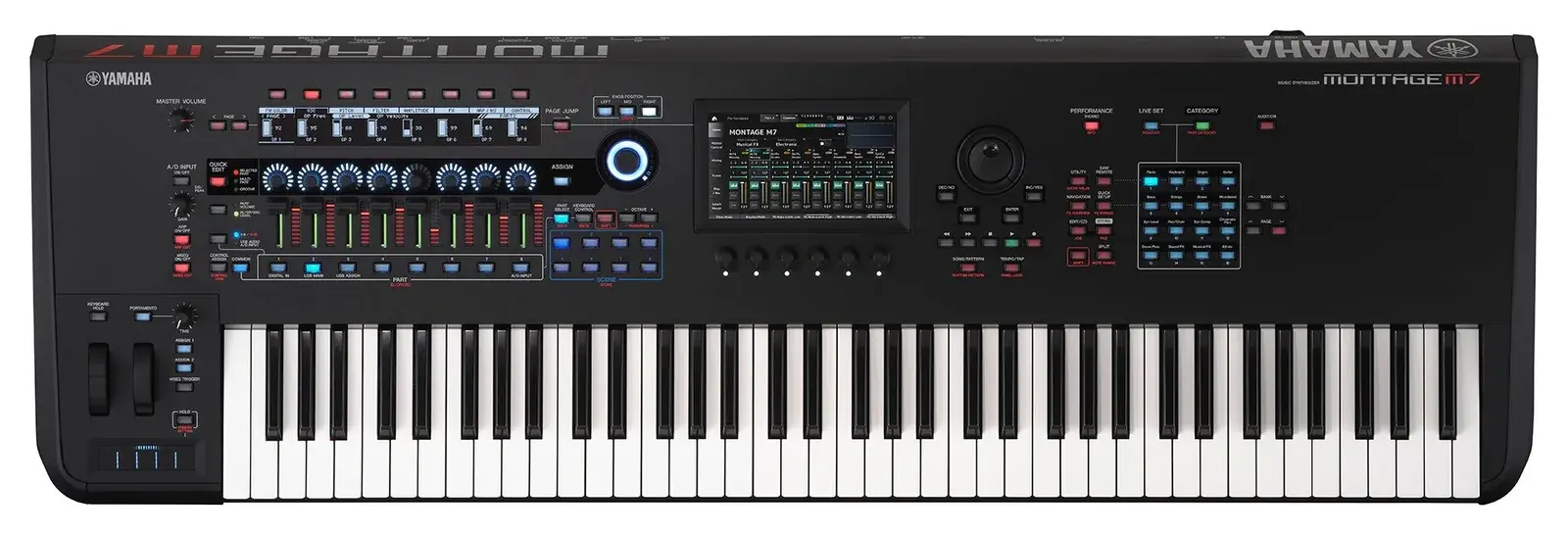
Yamaha
MONTAGE M7
Current- Keys
- 76
- Key action
- Semi-weighted
- Sections
- Piano, Electric piano, Organ, Synth, Sample playback
- Drawbars
- —
—2023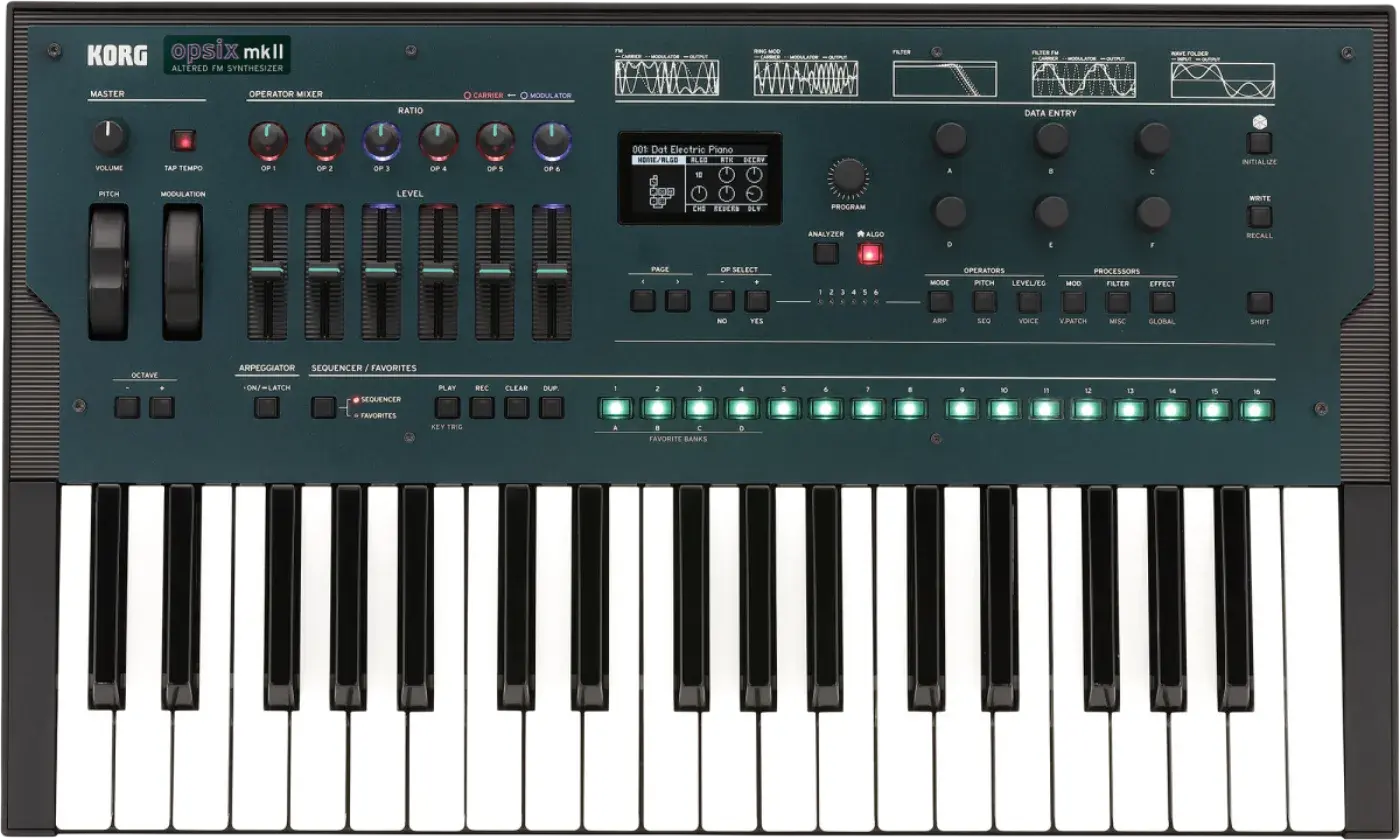
Sources
- DX7 history ↗ (Yamaha): launch date, specification, development and the DX7II.
- Yamaha DX7 ↗ (Wikipedia): price, sales, the custom chips and the factory sound designers.
- John Chowning, godfather of digital pop ↗ (The Guardian): the discovery of FM and Yamaha's licence.
- 40 years of the DX7 ↗ (Gearnews) and Exploring the Yamaha DX7 ↗ (Reverb Machine): presets and records.
- How I got that sound: Howard Jones ↗ and Classic tracks: a-ha ↗ (Sound On Sound).
- The 14 most important synths ↗ (Fact) and Dexed ↗ and Harold Faltermeyer on Axel F ↗ (MusicRadar).
- The synth sounds of Twin Peaks ↗ (Reverb) and The Final Countdown ↗) (Wikipedia).