
Yamaha reface DX
CurrentReleased 2015
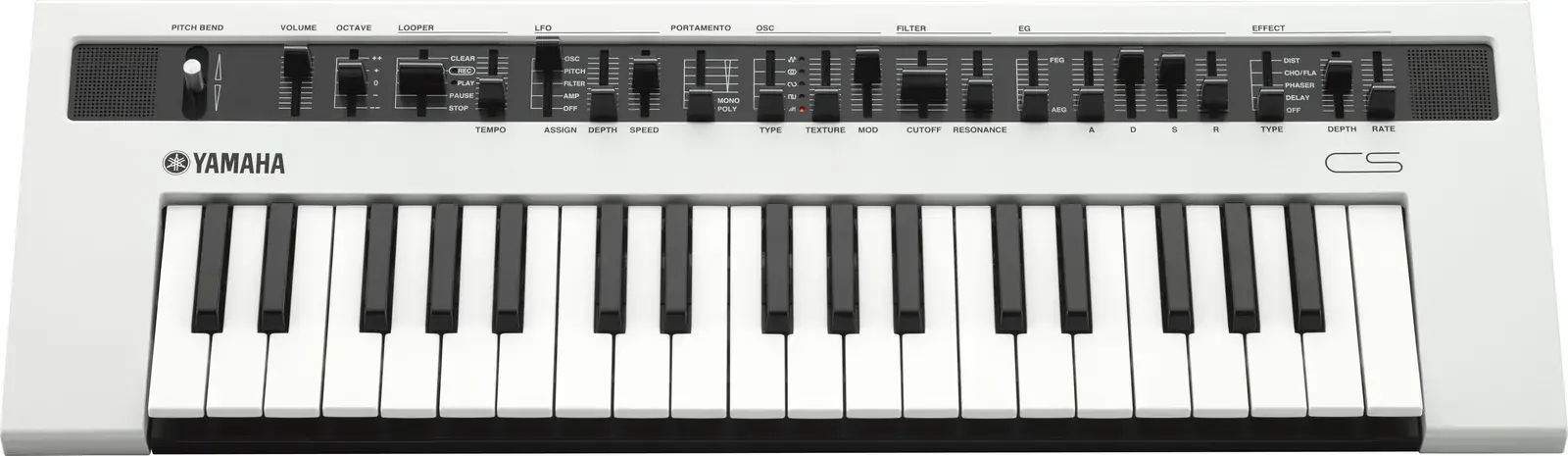
Four-operator FM with a touch panel instead of the DX7's membrane buttons, which is the first time Yamaha made FM programming something you would do for fun.
Specifications
General
- Manufacturer
- Yamaha
- Status
- Current
- Released
- 2015
Sound engine
- Engine
- Digital (FM)
- Voices
- 8
- Polyphony
- 8 notes
- Oscillators
- Four-operator FM with 12 algorithms
- Multi-timbral parts
- 1
- Effects
- Distortion, Touch wah, Chorus, Flanger, Phaser, Delay, Reverb
Keyboard
- Keys
- 37
- Key size
- Mini
- Key action
- Synth-action
- Aftertouch
- None
- Keybed
- HQ mini
Format
- Format
- Keyboard
- Motorised knobs
- No
- Features
- Built-in speakers (2 W x 2), Runs on six AA batteries (about 5 hours), MIDI breakout cable, Sliders for every parameter, Phrase looper, Touch-sensitive controls, 32 user voices
Connections
- MIDI ports
- DIN in, DIN out, USB
- CV / Gate
- No
Size & weight
- Colours
- Black
- Dimensions (W × D × H)
- 530 × 175 × 60 mm
- Weight
- 1.9 kg
Featured in
Sleeve notes · History
A short history of the synthesiser
From a 200-tonne dynamo to motorised knobs: the synths that changed things, in date order, with what each one added and what the jargon (voltage control, FM, wavetables, virtual analogue) actually means.
Sleeve notes · Listening
30 famous synth hooks and the synths that played them
From 'Jump' to 'Thriller' to 'Levels': the synth parts everyone knows, the instrument behind each one, where it sits in synth history and which plug-ins and keyboards get you the sound today.
Sleeve notes · Instrument story
The DX7: the sound of the eighties
Yamaha's DX7 put FM synthesis into a keyboard most bands could afford in 1983, and its presets ended up on a remarkable share of the decade's hits. How it came about, why nobody could program it, and eleven records to hear it on.