
People guide
Forty players who shaped the sound
Ten each in bass, piano, synth and keys, and production: the session musicians, sidemen and producers behind records you already know, what they actually played, and what you can hear.
Updated 27 September 2026SynthesizersStage KeyboardsOrgansSoftware Synths
How to read this
Four lists of ten: bass, piano, synth and keys, and production. Some of these names are famous. Rather more of them are not, because the job was to make somebody else's record sound good and then go home, and the sleeve credits often did not bother. The people who invented the synthesiser covers the engineers; this one covers the people who played the things.
The order is an argument, not a measurement. It leans towards influence — how much of what came afterwards sounds different because this person existed — rather than towards technique or record sales. Reasonable people will want to reorder it, and there are obvious names missing from every ten.
Bass
The instrument with the widest gap between importance and credit. Almost nobody outside the trade can name a bass player, and almost every record people love is held together by one.
1. James Jamerson
Bass · 1936–1983
Detroit, USA
- The Funk Brothers
- "What's Going On"
- "I Was Made to Love Her"
- "Bernadette"
Motown's house bassist through the label's greatest run, and for most of it uncredited: the records say 'The Funk Brothers' at best, and often nothing at all. He came up on upright and never really stopped playing like an upright player, which is why the lines wander chromatically where a rock bassist would sit on the root.
He played a 1962 Fender Precision he called the Funk Machine, with the original flatwound strings left on for years and the mutes still fitted, plucked with one finger of his right hand — the index, which other players nicknamed 'The Hook'. Almost everything anyone thinks of as a melodic bass line in pop starts here.
What you can hear: Lines that never repeat and never stop moving, syncopated against the drums instead of locked to them.
2. Carol Kaye
Bass, guitar · born 1935
Los Angeles, USA
- The Wrecking Crew
- Beach Boys, Pet Sounds
- "Wichita Lineman"
- Thousands of sessions
A working jazz guitarist who picked up the bass at a session when the booked player failed to turn up, and then spent the 1960s as one of the busiest bassists in Los Angeles — part of the loose pool of session musicians later called the Wrecking Crew.
She played with a pick and flatwounds, which is why her lines cut through a dense arrangement, and she wrote her own parts from chord charts rather than reading someone else's. She has since taught more bass players through her books and courses than most conservatories.
What you can hear: A pick attack with the palm muting the strings, playing a hook rather than a foundation.
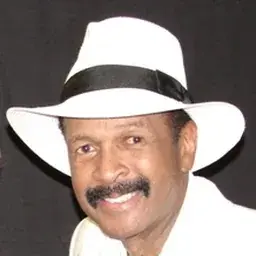
3. Larry Graham
Bass · born 1946
Beaumont, Texas, USA
- Sly & the Family Stone
- Graham Central Station
- "Thank You (Falettinme Be Mice Elf Agin)"
- Invented slap
Playing organ-and-bass duos with his mother in clubs, with no drummer, he started thumping the low strings with his thumb and snapping the high ones with his finger to supply the missing kick and snare. He called it 'thumpin' and pluckin''. Everyone else calls it slap.
He took it into Sly & the Family Stone, and within a few years it had become the default vocabulary for funk bass — and later for a good deal of fusion, pop and metal too.
What you can hear: Thumb on the low strings for the kick drum, finger snapping the high ones for the snare — one player doing two jobs.
Photo: Kennystevens, CC BY-SA 3.0, via Wikimedia Commons, cropped.
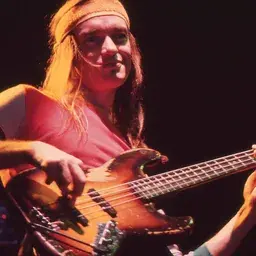
4. Jaco Pastorius
Bass · 1951–1987
Norristown, Pennsylvania, USA
- Weather Report
- Heavy Weather
- Joni Mitchell, Hejira
- "Portrait of Tracy"
He pulled the frets out of a Fender Jazz Bass and filled the slots with epoxy, which gave him a fretless that could sustain and slide like a voice. Then he played it as a lead instrument, using harmonics as chords and the upper register as melody.
His run with Weather Report and his work behind Joni Mitchell reset what the instrument was allowed to do. He was 35 when he died, and the vocabulary he invented is still being worked through.
What you can hear: The singing, vowel-like slide between notes that only a fretless makes, plus harmonics used as chords.
Photo: Chris Hakkens, CC BY 2.0, via Wikimedia Commons, cropped.
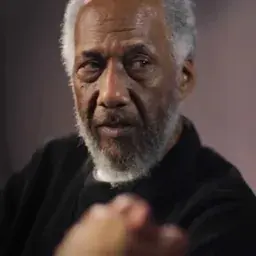
5. Chuck Rainey
Bass · born 1940
Cleveland, USA
- Steely Dan, Aja
- Aretha Franklin
- Quincy Jones
- Marvin Gaye
One of the most recorded bassists in American music, moving from New York soul dates to the Los Angeles studio scene without ever settling into a single genre. His playing on Steely Dan's Aja and The Royal Scam is the reference point for a lot of players.
Famously overdubbed a part on 'Peg' after being told not to slap on the session, and did it quietly enough that it stayed on the record.
What you can hear: A deep pocket filled in with ghost notes — the spaces between the notes doing as much as the notes.
Photo: The Official Xotic Guitars and Effects Channel, CC BY 3.0, via Wikimedia Commons, cropped.
6. Bernard Edwards
Bass, producer · 1952–1996
Greenville, North Carolina, USA
- Chic
- "Good Times"
- Sister Sledge, "We Are Family"
- Diana Ross, diana
Half of Chic with Nile Rodgers, and the half that played the part everyone can sing. The two of them wrote, played and produced together, which is why the records sound like a band rather than an assembly.
The bass line from 'Good Times' was lifted for 'Rapper's Delight' and then for a decade of records after it, making it arguably the most influential four bars of bass ever recorded.
What you can hear: A bass line written as the hook, not as the accompaniment — melodic, high on the neck, impossible to ignore.
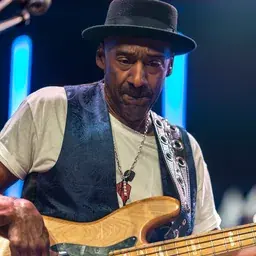
7. Marcus Miller
Bass, producer, composer · born 1959
Brooklyn, New York, USA
- Miles Davis, Tutu
- Luther Vandross
- David Sanborn
- Fender Jazz with a preamp
A teenage session player in New York who was on hundreds of dates before he was 25, then became Miles Davis's writer and producer for Tutu — composing, arranging and playing most of the instruments himself.
His modified Fender Jazz, with an onboard preamp scooping the mids, defined the bright, hi-fi slap tone of the 1980s onward.
What you can hear: Slap with a modern, scooped, almost percussive snap, and thumb-muted lines underneath ballads.
Photo: Quejaytee, CC BY-SA 4.0, via Wikimedia Commons, cropped.
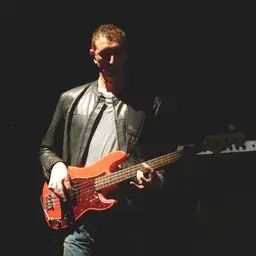
8. Pino Palladino
Bass · born 1957
Cardiff, Wales
- Paul Young, "Wherever I Lay My Hat"
- D'Angelo, Voodoo
- The Who
- John Mayer Trio
He had two careers with two different sounds. In the 1980s it was a fretless Music Man StingRay, with the lyrical slides on Paul Young's records making him the most imitated bassist in British pop.
Then he switched to a 1960s Precision with flatwounds and became the anchor of the neo-soul era, most famously on D'Angelo's Voodoo, where the whole band plays fractionally late on purpose. He later took the bass chair in The Who after John Entwistle died.
What you can hear: Playing deliberately behind the beat — the note lands a fraction after you expect it, and the groove leans back.
Photo: kubacheck, CC BY 2.0, via Wikimedia Commons, cropped.
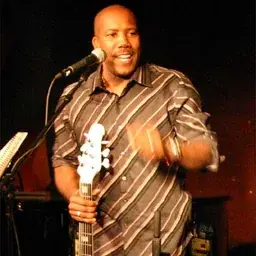
9. Nathan East
Bass · born 1955
Philadelphia, USA
- Eric Clapton
- Fourplay
- Daft Punk, "Get Lucky"
- Phil Collins
One of the most recorded bassists alive, with a credit list running from Barry White in the 1970s to Daft Punk's Random Access Memories. He has been Eric Clapton's bassist and musical foil for decades, and co-wrote 'Change the World'.
He sings while he plays, which is a good part of why his lines are so singable.
What you can hear: Melodic, unhurried support that gives the singer somewhere to stand, and a high harmony vocal on top.
Photo: Reservoirhill at English Wikipedia, Public domain, via Wikimedia Commons, cropped.
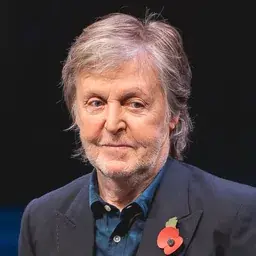
10. Paul McCartney
Bass · born 1942
Liverpool, England
- The Beatles
- Höfner 500/1
- Rickenbacker 4001S
- "Something", "Dear Prudence"
He took the bass job in the Beatles because nobody else wanted it, and then, largely by overdubbing his parts last once everything else was finished, turned it into a second melody line running under the song.
Listen to 'Something' or 'Lucy in the Sky with Diamonds' and the bass is doing something a tuba or a cello would do, not something a rhythm section would.
What you can hear: A countermelody where a root note should be — the part you find yourself humming instead of the tune.
Photo: Raph_PH, CC BY 2.0, via Wikimedia Commons, cropped.
Piano
Two kinds of player here: the ones whose name is on the sleeve, and the session pianists who played on everybody else's records and whose names are not. Both changed how the instrument is used in popular music.
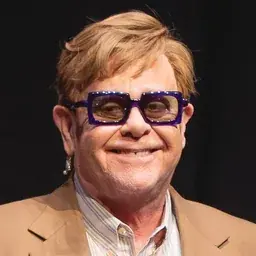
1. Elton John
Piano, singer, songwriter · born 1947
Pinner, England
- "Your Song"
- "Tiny Dancer"
- "Bennie and the Jets"
- Royal Academy of Music
A scholarship at the Royal Academy's junior school, then years of pub piano and anonymous session singing on budget cover albums, before the run of records with Bernie Taupin that made him the most recognisable piano player in pop.
The technique underneath is gospel and boogie: a right hand that plays chords rhythmically rather than melodically, so the piano is the rhythm section as much as the drums are.
What you can hear: A right hand hammering chord inversions on the offbeat, driving the song along without a guitar in sight.
Photo: Raph_PH, CC BY 2.0, via Wikimedia Commons, cropped.
Get near it: Nord Piano 6 88, Yamaha CP88
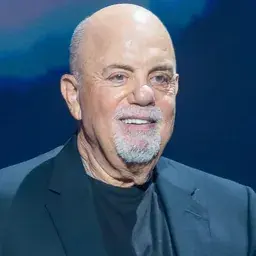
2. Billy Joel
Piano, singer, songwriter · born 1949
Hicksville, New York, USA
- "Piano Man"
- "Vienna"
- "Scenes from an Italian Restaurant"
- Classically trained
Classically trained as a child and then years in piano bars, which is where 'Piano Man' comes from and why his records are full of pianistic writing that pop songs do not usually attempt.
The intros give it away: the arpeggiated figure opening 'Vienna' or 'Summer, Highland Falls' is a classical device dropped into a three-minute song, and it is the reason those records are still taught to piano students.
What you can hear: Classical figures — arpeggios, counterpoint, key changes — used as the hook of a pop song.
Photo: Raph_PH, CC BY 2.0, via Wikimedia Commons, cropped.
Get near it: Nord Piano 6 88, Yamaha CP88
3. Richard Tee
Piano, Fender Rhodes · 1943–1993
Brooklyn, New York, USA
- Stuff
- Paul Simon, "Still Crazy After All These Years"
- "Just the Two of Us"
- Aretha Franklin
The New York session pianist of the 1970s and 80s, and a member of Stuff, the band of studio players who backed half of the city's records and then made their own. Church-trained, and it shows in every voicing.
His touch is the thing: heavy, unhurried and slightly behind the beat, with a gospel grace note leaning into almost every chord. Put his Rhodes through a chorus and you have the sound of a particular decade of New York records.
What you can hear: Gospel voicings played with a heavy hand, landing a hair late, with the sustain pedal doing a lot of work.
Get near it: Nord Stage 4 88, Nord Electro 7 73
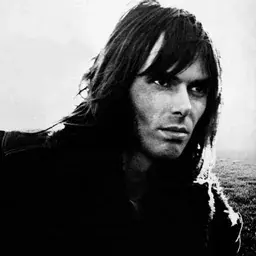
4. Nicky Hopkins
Piano · 1944–1994
London, England
- Rolling Stones, "Sympathy for the Devil"
- The Kinks
- The Who
- Jefferson Airplane
Chronic illness from his teens made touring nearly impossible, so he became the pianist British rock came to instead. If a 1960s or 70s British record has a piano part you remember, there is a fair chance it is him and a fair chance he was not credited.
The Stones' 'She's a Rainbow', the Kinks' 'Sunny Afternoon', the Who's 'Getting in Tune' — different bands, same pair of hands.
What you can hear: A piano part that sounds composed rather than comped, sitting in a gap in the arrangement you had not noticed was there.
Photo: Columbia Records, Public domain, via Wikimedia Commons, cropped.
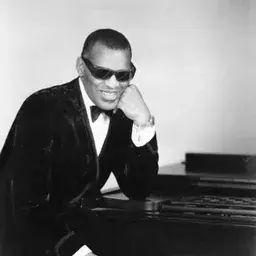
5. Ray Charles
Piano, singer · 1930–2004
Albany, Georgia, USA
- "What'd I Say"
- "Georgia on My Mind"
- Modern Sounds in Country and Western Music
- Wurlitzer electric piano
He put gospel phrasing and church chord movement into secular songs, which was controversial at the time and became the basis of soul music. The piano and the voice do the same thing, and they answer each other.
'What'd I Say' was improvised to fill time at the end of a dance set, and the electric piano on it — a Wurlitzer — introduced a lot of people to the instrument.
What you can hear: Call and response between the voice and the keyboard, with a gospel triplet feel underneath.
Photo: William Morris Agency (management)/Photo by Maurice Seymour, New York., Public domain, via Wikimedia Commons, cropped.
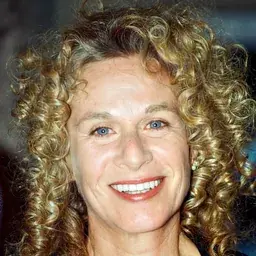
6. Carole King
Piano, songwriter · born 1942
Brooklyn, New York, USA
- Brill Building
- "Will You Love Me Tomorrow"
- "(You Make Me Feel Like) A Natural Woman"
- Tapestry
A professional songwriter at 17, writing at a piano in the Brill Building with Gerry Goffin and turning out standards at a rate that is hard to credit now. She played the demos herself, and the demos are often what the finished records copied.
Tapestry then established that the songwriter could be the artist, at the piano, without a band hiding the fact.
What you can hear: Chords chosen by a songwriter rather than a pianist — the harmony is the melody's argument, not its decoration.
Photo: John Mathew Smith & www.celebrity-photos.com from Laurel Maryland, USA, CC BY-SA 2.0, via Wikimedia Commons, cropped.
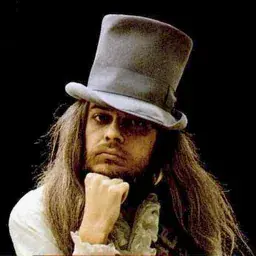
7. Leon Russell
Piano · 1942–2016
Lawton, Oklahoma, USA
- The Wrecking Crew
- Mad Dogs & Englishmen
- "A Song for You"
- Joe Cocker, Delaney & Bonnie
A Los Angeles session player through the 1960s — on the same dates as Carol Kaye — before stepping out front with a gospel-rock piano style that half of the southern rock and country rock that followed borrowed from.
'A Song for You' has since been recorded by well over a hundred artists.
What you can hear: Southern gospel and boogie mixed together, with a rolling left hand and a lot of pedal.
Photo: Shelter Records, Public domain, via Wikimedia Commons, cropped.
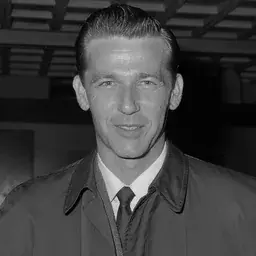
8. Floyd Cramer
Piano · 1933–1997
Shreveport, Louisiana, USA
- The Nashville sound
- "Last Date"
- Elvis Presley sessions
- Patsy Cline
The house pianist of Nashville's studio system, and the man who popularised slip-note playing: hitting a neighbouring note and sliding immediately into the chord tone, so the piano bends the way a steel guitar or a country voice does.
It is on hundreds of records from the late 1950s onward, and it is a large part of what 'the Nashville sound' means.
What you can hear: A grace note a step below, released instantly into the real note, so the piano seems to bend.
Photo: Jack de Nijs for Anefo / Anefo, CC0, via Wikimedia Commons, cropped.
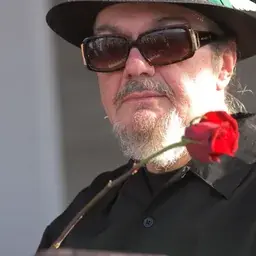
9. Dr. John
Piano, singer · 1941–2019
New Orleans, USA
- "Right Place, Wrong Time"
- Gris-Gris
- New Orleans piano tradition
- Los Angeles session work
Mac Rebennack started as a session guitarist, switched to piano after a hand injury, and carried the New Orleans piano tradition of Professor Longhair out into the wider world under a stage name.
Before the solo records he was part of the Los Angeles studio scene, playing on other people's sessions alongside the Wrecking Crew regulars.
What you can hear: The New Orleans rhumba-boogie left hand — a Caribbean bounce under a blues right hand.
Photo: Derek Bridges New Orleans, LA, CC BY 2.0, via Wikimedia Commons, cropped.
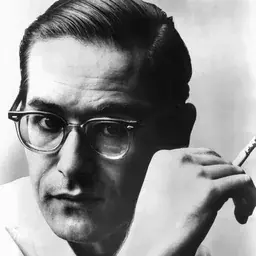
10. Bill Evans
Piano · 1929–1980
Plainfield, New Jersey, USA
- Miles Davis, Kind of Blue
- Sunday at the Village Vanguard
- Rootless voicings
- The interactive trio
His voicings — leaving the root to the bass player and stacking the remaining notes in fourths and sevenths — became the default way jazz and, eventually, a great deal of pop and film music harmonises a chord.
His trio with Scott LaFaro also changed what a rhythm section was for: three people improvising together rather than two accompanying one.
What you can hear: Chords with the root missing, so they float rather than land, and a touch soft enough to hear the felt.
Photo: Steve Schapiro, Public domain, via Wikimedia Commons, cropped.
Synth and keys
In the years before presets, getting a sound out of a synthesiser was a separate trade from playing it, and the people who could do both ended up on an extraordinary number of records. Several names here are on albums you own without appearing anywhere you would look.
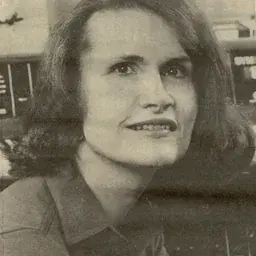
1. Wendy Carlos
Synthesist, composer · born 1939
Pawtucket, Rhode Island, USA
- Switched-On Bach (1968)
- A Clockwork Orange
- Tron
- Worked directly with Bob Moog
Switched-On Bach did something nobody had managed: it made a modular synthesiser sound like music rather than a laboratory. Every line was played by hand on a monophonic instrument and multitracked, one note at a time, with the tuning drifting between takes.
She fed her findings back to Bob Moog, and several features of later Moog instruments exist because she asked for them. The album also, almost single-handedly, convinced record companies that synthesisers could sell.
What you can hear: A monophonic modular played with real phrasing, stacked into counterpoint — the first synth record that swings.
Photo: V.L. Smith / Bay Area Reporter, Public domain, via Wikimedia Commons, cropped.
Get near it: Arturia Modular V3, Arturia Mini V4
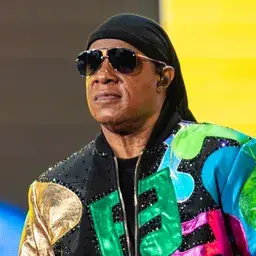
2. Stevie Wonder
Keys, synthesist, songwriter · born 1950
Saginaw, Michigan, USA
- Talking Book, Innervisions
- TONTO
- Clavinet on "Superstition"
- "Boogie On Reggae Woman"
Working with Malcolm Cecil and Robert Margouleff and their enormous TONTO synthesiser, he spent the early 1970s making records where the bass, the horns and the pads are all him, all synthesised, and all played with the phrasing of a soul musician.
The Hohner Clavinet riff on 'Superstition' did for that instrument what Jimi Hendrix did for the Stratocaster.
What you can hear: Synth bass and synth horns played with human phrasing — the machine swinging because the player does.
Photo: Raph_PH, CC BY 2.0, via Wikimedia Commons, cropped.
Get near it: Arturia Mini V4, Nord Stage 4 88
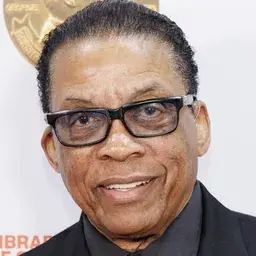
3. Herbie Hancock
Keys, composer · born 1940
Chicago, USA
- Miles Davis Quintet
- Head Hunters
- "Chameleon"
- "Rockit"
He went from the most celebrated acoustic piano chair in jazz to a Fender Rhodes, a Hohner Clavinet and an ARP synthesiser, and made Head Hunters, which outsold every jazz record before it.
Two decades later he did it again with 'Rockit', built on a Fairlight and turntable scratching, which put both in front of a pop audience.
What you can hear: Jazz harmony played on electric keyboards with a funk drummer's sense of time.
Photo: Library of Congress Life, CC0, via Wikimedia Commons, cropped.
Get near it: Arturia CMI V, Nord Stage 4 88
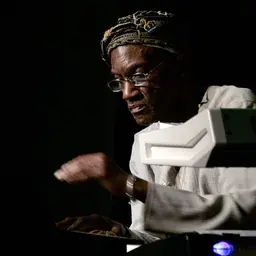
4. Bernie Worrell
Keys, synthesist · 1944–2016
Long Branch, New Jersey, USA
- Parliament-Funkadelic
- Minimoog bass on "Flash Light"
- Talking Heads live band
- Conservatory-trained
Classically trained from childhood and then the harmonic engine of Parliament-Funkadelic, where he used a Minimoog not as a lead instrument but as the bass — the sliding, rubbery low end of 'Flash Light' is three Minimoogs, not a bass guitar.
That idea, the synth as the bottom of the record, runs straight through hip-hop and dance music.
What you can hear: A Minimoog doing the bass player's job, with portamento sliding between the notes.
Photo: Manfred Werner / Tsui, CC BY-SA 3.0, via Wikimedia Commons, cropped.
Get near it: Arturia Mini V4
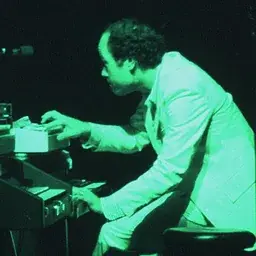
5. Jan Hammer
Synthesist, composer · born 1948
Prague, Czechoslovakia
- Mahavishnu Orchestra
- Miami Vice theme
- Jeff Beck, Wired
- Minimoog pitch-bend technique
He worked out that if you hung a Minimoog on a strap and worked the pitch wheel with your left hand, you could phrase a synth line like a guitarist bending strings — and then went toe to toe with John McLaughlin and Jeff Beck doing exactly that.
The Miami Vice theme later made him the only person to take a synthesiser instrumental to number one in the US.
What you can hear: A synth lead that bends, vibratos and screams like a lead guitar, because it is being played like one.
Photo: Jim Summaria, http://www.jimsummariaphoto.com, CC BY-SA 3.0, via Wikimedia Commons, cropped.
Get near it: Arturia Mini V4
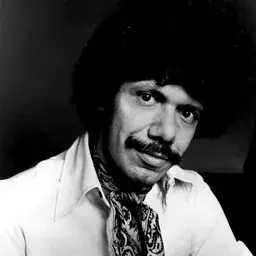
6. Chick Corea
Keys, composer · 1941–2021
Chelsea, Massachusetts, USA
- Miles Davis, Bitches Brew
- Return to Forever
- "Spain"
- Rhodes and Minimoog
One of the players who took the Fender Rhodes seriously as an instrument in its own right rather than a portable piano, then built Return to Forever around the combination of Rhodes, Minimoog and a rhythm section playing at full tilt.
His lines are fast, clean and articulated in a way that suits an electric keyboard's attack.
What you can hear: Rapid, precisely articulated single-note lines on Rhodes, doubled an octave up by a synth.
Photo: Polydor Records, Public domain, via Wikimedia Commons, cropped.
Get near it: Nord Stage 4 88
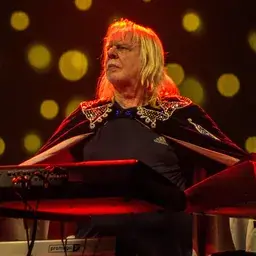
7. Rick Wakeman
Keys · born 1949
London, England
- Yes
- Mellotron on "Space Oddity"
- Piano on "Life on Mars?"
- Cat Stevens, "Morning Has Broken"
Before Yes he was one of London's busiest session keyboard players, which is why his hands are on several records people do not associate with him at all — the Mellotron on Bowie's 'Space Oddity' and the piano on 'Life on Mars?' among them.
With Yes he assembled the stacked, semicircular keyboard rig that became the visual shorthand for progressive rock, because each sound needed its own instrument.
What you can hear: Several keyboards at once — organ, Mellotron, Minimoog, piano — each doing a different job in the same bar.
Photo: Stéphane Gallay from Laconnex, Switzerland, CC BY 2.0, via Wikimedia Commons, cropped.
Get near it: Hammond XK-5, Arturia Mini V4
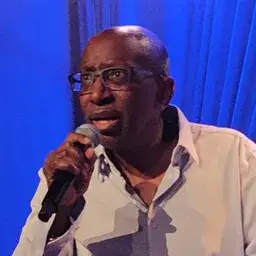
8. Greg Phillinganes
Keys, musical director · born 1956
Detroit, USA
- Michael Jackson, Off the Wall, Thriller, Bad
- Stevie Wonder's band at 18
- Toto
- Eric Clapton
Hired into Stevie Wonder's band as a teenager, then the keyboard player on the Quincy Jones-produced Michael Jackson albums, and since then the musical director of choice for an improbable number of major artists.
The job on those records is mostly invisible: the part that makes the track move without ever asking to be noticed. Which is exactly the skill.
What you can hear: The keyboard part that makes a pop record groove, and that you would only miss if it were taken away.
Photo: Joe Sukkos, CC0, via Wikimedia Commons, cropped.
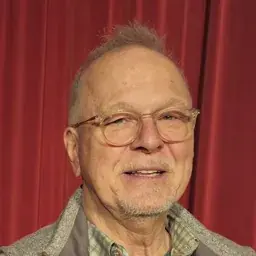
9. Michael Boddicker
Session synthesist · born 1953
Cedar Rapids, Iowa, USA
- Michael Jackson, Thriller
- "Flashdance… What a Feeling"
- Lionel Richie
- Vocoder and Emulator
One of the small group of Los Angeles synthesists who were called in when a record needed a sound nobody had yet, in the years when programming a synthesiser was a specialist trade rather than a menu.
If a big American pop record between about 1980 and 1990 has a striking synth texture on it, there is a reasonable chance he built it.
What you can hear: The specific, glossy synth textures of 1980s American pop — vocoded vocals, sampled stabs, glassy pads.
Photo: BlackravenX1, CC BY-SA 4.0, via Wikimedia Commons, cropped.
Get near it: Arturia Vocoder V, Arturia Emulator II V
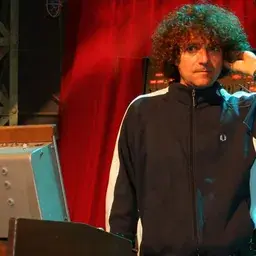
10. Anthony Marinelli
Synthesist, composer · born 1959
Los Angeles, USA
- Michael Jackson, Thriller
- Synth programming with Brian Banks
- Film and television scores
- Modular Moog
Part of the same Los Angeles synth-programming world, credited with Brian Banks for the synthesiser work on Thriller. At the time this meant patching, tuning and performing sounds that did not exist until somebody made them, often on a large modular system.
He went on to a long career scoring film and television, but the session years are the reason his name turns up on records people know by heart.
What you can hear: Programmed synth parts built for one record and then never quite repeatable — the pre-preset era of pop.
Photo: Beau Bonetti, CC BY-SA 2.0, via Wikimedia Commons, cropped.
Get near it: Arturia Modular V3
Production
A producer's job changes with the decade — arranger, engineer, editor, writer, or the person who tells a band to stop. What these ten share is that records made after them do not sound like records made before them.
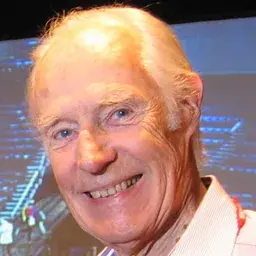
1. George Martin
Producer, arranger · 1926–2016
London, England
- The Beatles
- "A Day in the Life"
- "Eleanor Rigby"
- AIR Studios
A trained oboist running EMI's comedy label who ended up producing the most scrutinised catalogue in popular music. His contribution was largely translation: the band would describe a sound and he would work out what notation, what tape trick or what string octet would produce it.
The orchestral crescendo in 'A Day in the Life', the string arrangement on 'Eleanor Rigby' and the spliced-together two halves of 'Strawberry Fields Forever', recorded in different keys at different tempos, are all his solutions to somebody else's request.
What you can hear: The studio used as an instrument — tape, scissors and an arranger's ear applied to a pop song.
Photo: Adamsharp, CC BY-SA 3.0, via Wikimedia Commons, cropped.
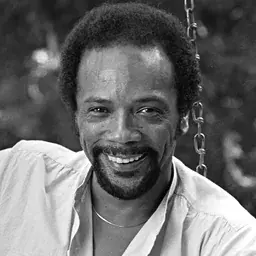
2. Quincy Jones
Producer, arranger, composer · 1933–2024
Chicago, USA
- Off the Wall, Thriller, Bad
- "We Are the World"
- Frank Sinatra, Count Basie
- Film scores
He arrived as a jazz trumpeter and arranger, wrote for Basie and Sinatra, scored films, and then produced the best-selling album ever made. The through-line is arrangement: knowing which instrument should play which line, and when nothing should play at all.
The Michael Jackson records work because of the space in them, and the space is the arranger's decision.
What you can hear: An arrangement with room in it — every part audible, nothing competing, the vocal always in front.
Photo: Los Angeles Times, CC BY 4.0, via Wikimedia Commons, cropped.
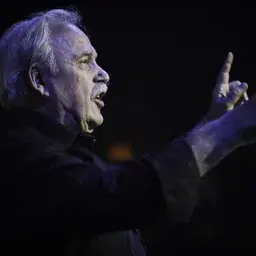
3. Giorgio Moroder
Producer, composer · born 1940
Ortisei, Italy
- Donna Summer, "I Feel Love"
- Midnight Express
- Scarface
- Sequenced Moog
'I Feel Love' in 1977 has no acoustic instruments on the backing at all: a Moog modular, driven by a sequencer locked to a click track so the players could overdub to it. Nobody had made a pop record that way before.
Brian Eno reportedly ran into the studio to tell David Bowie he had heard the sound of the future. He was right — most dance and electronic music since descends from that record.
What you can hear: A relentless sixteenth-note synth sequence as the whole rhythm section, machine-steady under a human voice.
Photo: Andy Witchger, CC BY 2.0, via Wikimedia Commons, cropped.
Get near it: Arturia Modular V3, Arturia Mini V4
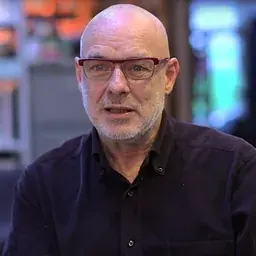
4. Brian Eno
Producer, composer · born 1948
Woodbridge, England
- Bowie's Berlin trilogy
- Talking Heads, Remain in Light
- U2, The Joshua Tree
- Oblique Strategies
A self-described non-musician who joined Roxy Music to process other people's instruments, and then made treatment itself the compositional act. As a producer his job is usually to change what a band thinks it is doing.
The Oblique Strategies cards — a deck of instructions to break a stuck session — are a fair summary of the method.
What you can hear: Treatment as composition: the effect on the sound is the part, not a coating over it.
Photo: How We Get To Next, CC BY 3.0, via Wikimedia Commons, cropped.
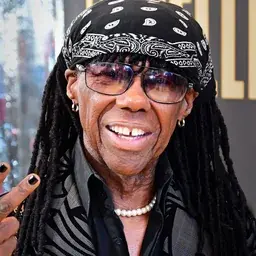
5. Nile Rodgers
Producer, guitarist · born 1952
New York, USA
- Chic
- Bowie, "Let's Dance"
- Madonna, "Like a Virgin"
- Daft Punk, "Get Lucky"
Half of Chic with Bernard Edwards, and then the producer that artists call when a record needs to move. He plays the rhythm guitar part himself, and it is always the same instrument, a 1960 Stratocaster he calls the Hitmaker.
Four decades separate 'Le Freak' from 'Get Lucky' and the guitar does the same job on both.
What you can hear: A clean, chucking sixteenth-note rhythm guitar playing chord fragments — all groove, no distortion.
Photo: PhilipRomanoPhoto, CC BY-SA 4.0, via Wikimedia Commons, cropped.
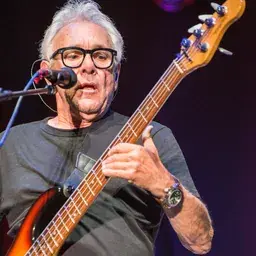
6. Trevor Horn
Producer · born 1949
Durham, England
- Frankie Goes to Hollywood, "Relax"
- ABC, The Lexicon of Love
- Yes, "Owner of a Lonely Heart"
- Fairlight CMI
He had a hit as half of Buggles with 'Video Killed the Radio Star' and then became the most technologically aggressive producer in Britain, building records out of Fairlight samples with a team that included the people who became Art of Noise.
His records were often assembled rather than performed, which at the time was either the future or cheating, depending on who you asked.
What you can hear: Maximal, sample-built production — orchestral stabs, gated drums, everything larger than life.
Photo: RoweCo, CC BY 2.0, via Wikimedia Commons, cropped.
Get near it: Arturia CMI V
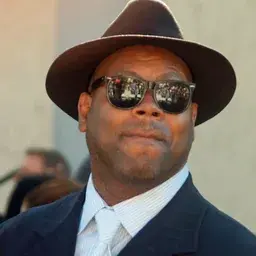
7. Jimmy Jam & Terry Lewis
Producers, songwriters · both born 1959
Minneapolis, USA
- Janet Jackson, Control, Rhythm Nation 1814
- The S.O.S. Band
- Human League, "Human"
- Flyte Tyme Studios
They came out of The Time, in Prince's Minneapolis orbit, and were sacked from the band for missing a show because they were producing somebody else's session. That session became a hit, and they never looked back.
Janet Jackson's Control is the template for a great deal of what R&B and pop production did afterwards: hard, programmed drums with lush keyboard harmony over the top.
What you can hear: Stiff, heavily programmed drum machine patterns under warm, chorused keyboard chords.
Photo: Angela George, CC BY-SA 3.0, via Wikimedia Commons, cropped.
8. Dr. Dre
Producer · born 1965
Compton, California, USA
- N.W.A
- The Chronic
- Doggystyle
- Eminem, The Marshall Mathers LP
He moved hip-hop production away from sampling alone and towards having musicians replay the parts in the room, which is why G-funk records have live basslines and portamento synth leads rather than loops.
His obsession with getting the drums to hit correctly is the reason those records still sound louder than everything around them.
What you can hear: Live-played funk bass and a whining synth lead over programmed drums mixed enormously loud.
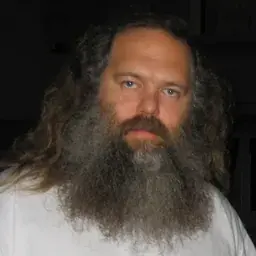
9. Rick Rubin
Producer · born 1963
Long Beach, New York, USA
- Def Jam
- Run-DMC and Aerosmith, "Walk This Way"
- Johnny Cash, American Recordings
- Red Hot Chili Peppers
He started Def Jam in a university dormitory and produced records for LL Cool J, the Beastie Boys and Slayer before he was 25. His method is famously subtractive: take things out until only what matters is left.
The Johnny Cash American albums are the extreme case — a voice, a guitar, and nothing to hide behind.
What you can hear: Subtraction. Whatever is not doing a job gets removed, and what is left is mixed very close.
Photo: jasontheexploder at https://www.flickr.com/photos/26251139@N00/, CC BY 3.0, via Wikimedia Commons, cropped.
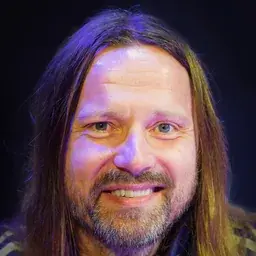
10. Max Martin
Producer, songwriter · born 1971
Stockholm, Sweden
- Britney Spears, "…Baby One More Time"
- Backstreet Boys
- Katy Perry, Taylor Swift
- Cheiron Studios
A Swedish former glam-metal singer who, at Cheiron Studios, worked out a repeatable method for pop songwriting — melodic phrases built like mathematical sequences, and hooks placed where an audience's attention actually is.
He has more US number ones as a writer than anyone except Lennon and McCartney, which is either a remarkable fact or a slightly alarming one.
What you can hear: Melodic engineering — a hook in the first ten seconds and another one in every section after it.
Photo: Philip Romano, CC BY-SA 4.0, via Wikimedia Commons, cropped.
Who is missing
Plenty. Ten is a cruel number: Duck Dunn, Anthony Jackson, Tony Levin and Bootsy Collins all have a case in the bass list, and Professor Longhair, Oscar Peterson, Nicky Hopkins' contemporary Ian Stewart and Booker T. Jones all have one in the keyboard lists. Phil Spector, Berry Gordy, Sylvia Robinson, Timbaland and Butch Vig all changed production.
The four lists also skew heavily American and heavily male, which reflects who the studio system hired rather than who could play. Carol Kaye, Carole King and Wendy Carlos were exceptions in rooms that did not make many.