
History guide
The people who invented the synthesiser
Profiles of the engineers behind the instruments: Moog, Buchla, Oberheim, Dave Smith, Kakehashi, Chowning and more. Who they were, what they built, and what we still use because of them.
Updated 27 September 2026SynthesizersStage KeyboardsOrgans
How to read this
The history of the synthesiser follows the instruments. This guide follows the people who built them. Most were engineers first and business people a long way second, and a surprising number lost control of the company that carried their name. Each card says when and where they worked, which companies they started, what they're known for, and the one thing we still use today because of them.
They're grouped roughly by era. Where a person's ideas are still inside something in this catalogue, the card links to it.
Photos are public domain or under a Creative Commons licence, credited under each card with a link to the original. Where we couldn't find one we're allowed to use, we've left the photo out rather than borrow one.
The pioneers (1920–1960s)
Before anyone said 'synthesiser', a handful of inventors proved that electricity could make music. None of them built a synth as we know it now, but the people in the next section grew up with their instruments.
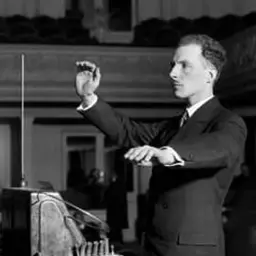
Léon Theremin
1896–1993 · Petrograd (St Petersburg), Russia, and New York, USA
Physico-Technical Institute, Petrograd; his own New York studio
- Theremin (1920)
- Played without touch
- Rhythmicon (with Henry Cowell, 1931)
Lev Termen was a physicist building a device to measure gases when he noticed that moving his hand near the circuit changed the pitch it whistled. By 1920 he had turned that into an instrument you play in the air: one antenna for pitch, one for volume. He demonstrated it to Lenin in 1922 and toured Europe and America, and in 1929 RCA began selling theremins under licence.
He lived in New York for ten years, then went back to the Soviet Union abruptly in 1938. There he was sent to a prison laboratory, where his work included a hidden listening device, 'The Thing', that sat in the US ambassador's office in Moscow for years before it was found.
Legacy: The first electronic instrument most people ever heard, and the sound of 1950s sci-fi films. It also paid for a teenage Bob Moog's hobby: he built and sold theremin kits long before he built a synth.
Playing his instrument, 1927. Photo: Bettmann Archive, Public domain, via Wikimedia Commons, cropped.
Laurens Hammond
1895–1973 · Evanston and Chicago, USA
Hammond Clock Company, Hammond Organ Company
- Hammond organ (1935)
- Tonewheels and drawbars
- Novachord (1939)
- Synchronous electric clock
Hammond made his first fortune from a quiet, accurate electric clock driven by a motor that locked to the mains frequency. He reused that motor to spin a row of toothed metal wheels past magnetic pickups, each wheel giving one pitch. Drawbars mix those pitches as harmonics, which makes the Hammond organ an additive synthesiser you could buy for a church hall in 1935.
In 1939 his company built the Novachord: 72 notes of polyphony, filters and envelopes, all from valves. It was a polyphonic subtractive synth 35 years early, and too big, too fragile and too costly to survive the war.
Legacy: Drawbars and the tonewheel sound, still at the centre of jazz, gospel and rock organ playing. The Hammond name has been owned by Suzuki since 1989, and today's organs model the tonewheels digitally.
In the catalogue: Hammond XK-5, Hammond SK Pro 73, Hammond B-3 mk2
Honolulu Star-Bulletin, 1940. Photo: Public domain, via Wikimedia Commons, cropped.
Daphne Oram
1925–2003 · Kent, England
BBC Radiophonic Workshop (co-founder), Oramics Studios
- BBC Radiophonic Workshop (1958)
- Oramics: drawn sound
- Tape music
Oram joined the BBC as a studio engineer during the Second World War and spent her nights experimenting with tape recorders. In 1958 she co-founded the BBC Radiophonic Workshop, then left within a year because the BBC wouldn't take electronic music as seriously as she did.
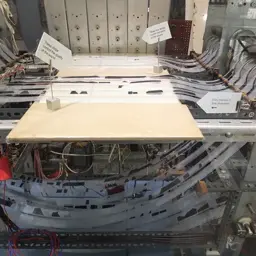
In a converted oast house in Kent she built Oramics. You drew shapes on strips of 35mm film, and the machine read them to set the pitch, volume and tone of each note: music drawn rather than played.
Legacy: Drawing a curve to shape a sound is now everyday: envelope and automation lanes in every DAW, and draw-your-own wavetables in software synths. The Oramics machine is in the Science Museum in London.
The Oramics machine she built. Photo: tpholland, CC BY 2.0, via Wikimedia Commons, cropped.
East coast, west coast (1960s)
Two Americans, 3,000 miles apart and within a year or so of each other, landed on the same idea: build a synthesiser from separate modules that control each other with voltages. They took it in opposite directions, which is why people still talk about 'east coast' and 'west coast' synthesis.
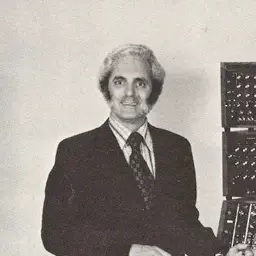
Robert Moog
1934–2005 · New York and Asheville, North Carolina, USA
R.A. Moog Co. (later Moog Music), Big Briar
- Moog modular (1964)
- Ladder filter
- 1 volt per octave
- Minimoog Model D (1970)
- Moogerfooger pedals
Bob Moog built theremins as a teenager and sold theremin kits while he studied engineering physics (his PhD is from Cornell). After working with the composer Herbert Deutsch, he showed a set of voltage-controlled modules at the Audio Engineering Society convention in 1964: oscillators, amplifiers and his transistor 'ladder' filter, patched with cables and played from a keyboard.
Wendy Carlos's Switched-On Bach ↗ (1968) made the name famous. The modular was the size of a wardrobe, so in 1970 his team hard-wired the most useful path into a small box with a keyboard: the Minimoog. Money trouble cost him control of the company. He left in 1977, started Big Briar in North Carolina to make theremins and effects pedals, and only won back the right to use his own name in 2002. Moog Music has been part of inMusic, the owner of Akai, since 2023.
Legacy: The four-pole ladder filter, the one-volt-per-octave standard, and the idea that a synth is a keyboard instrument with a fixed signal path and a pitch-bend wheel on the left. Nearly every mono synth with a row of knobs owes something to the Minimoog.
In the catalogue: Yamaha reface CS
Around 1974. Photo: Moog Music, Public domain, via Wikimedia Commons, cropped.
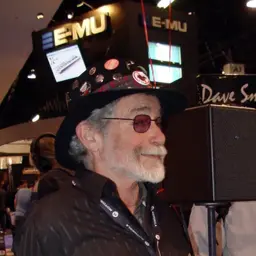
Don Buchla
1937–2016 · Berkeley, California, USA
Buchla & Associates
- Buchla 100 series (1963–65)
- Complex oscillators
- Low-pass gates
- Touch plates, not keys
- Music Easel (1973)
Buchla studied physics at Berkeley. A commission from the San Francisco Tape Music Center, where Morton Subotnick and Ramon Sender wanted a way to make electronic music without cutting and splicing tape, led to his first modular system. He refused to fit a piano keyboard: he thought it dragged electronic music back into old habits, so he used touch-sensitive metal plates instead. He didn't much like the word 'synthesiser' either.
Where Moog started with a bright waveform and filtered it, Buchla started simple and made it complex. His oscillators folded and modulated waves to add harmonics, and his low-pass gate opened volume and brightness together, so notes rang and decayed like something struck. He also built some of the first step sequencers and random voltage sources.
Legacy: 'West coast' synthesis: wavefolders, complex oscillators, low-pass gates and random voltages are all over Eurorack today. Instruments are still made under the Buchla name.
Photo: Brandon Daniel, CC BY-SA 2.0, via Wikimedia Commons, cropped.
Taking it on the road (1969–1970s)
Moog and Buchla built for studios and universities. The next wave made synths smaller, more stable and cheap enough for bands.
Alan R. Pearlman
1925–2019 · Massachusetts, USA
Nexus Research Laboratory, ARP Instruments
- ARP 2500 (1970)
- ARP 2600 (1971)
- ARP Odyssey (1972)
- Oscillators that stayed in tune
Before synths, Pearlman designed precision amplifiers, some of them for the US space programme. He started ARP in 1969 (the name is his initials) with David Friend and Lewis Pollock. His priority was oscillators that stayed in tune, the big complaint about early synths, and he replaced tangles of patch cables with switch matrices and sliders.
The ARP 2500 plays the five-note phrase that greets the aliens in Close Encounters of the Third Kind. The Odyssey went head to head with the Minimoog, and for much of the 1970s ARP outsold Moog. An expensive guitar synthesiser, the Avatar, helped sink the company in 1981.
Legacy: The ARP 2600 taught a generation: it's semi-modular, so it plays with no cables in but anything can be re-patched, and the signal flow is printed on the panel. Korg has since made new versions of the Odyssey and the 2600 with help from ARP's original team.
Peter Zinovieff, David Cockerell and Tristram Cary
Zinovieff 1933–2021 · London, England
EMS (Electronic Music Studios)
- VCS3 (1969)
- Synthi AKS (1972)
- Pin-matrix patching
- Synthi 100
Zinovieff, a geologist by training, ran one of the best-equipped electronic music studios in the world from his house in Putney. In 1969 he founded EMS with the engineer David Cockerell and the composer Tristram Cary. Their VCS3 was small, relatively cheap and patched by pushing pins into a grid rather than with cables. The Synthi AKS folded the same thing into a briefcase.
Pink Floyd, Brian Eno, Hawkwind and Jean-Michel Jarre all used EMS synths, and the BBC Radiophonic Workshop bought a room-sized Synthi 100. Cockerell later designed Akai's S-series samplers.
Legacy: The pin matrix, the idea of a go-anywhere synth, and a wilder, more sci-fi sound than the Moog. The VCS3 is the sound of British experimental rock in the early 70s.
Polyphony, memory and MIDI (1974–1983)
By the mid-70s the goal was chords and saved sounds. The people who got there first also ended up agreeing on how synths should talk to each other.
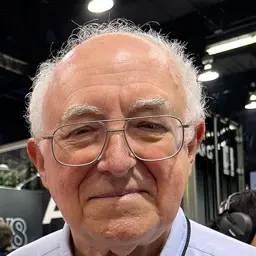
Tom Oberheim
born 1936 · Los Angeles, USA
Oberheim Electronics, Marion Systems
- Maestro ring modulator and phase shifter
- SEM (1974)
- Four Voice (1975)
- OB-X and OB-Xa (1979–80)
- DMX drum machine (1981)
- Matrix-12 and Xpander
Oberheim was a computer engineer who built amplifiers for musician friends, then a ring modulator and a phase shifter that Gibson sold under its Maestro brand. As an ARP dealer he designed a sequencer and then the SEM (Synthesizer Expander Module), a compact voice meant to thicken another synth's sound. Put two, four or eight SEMs in a case under a keyboard and you had some of the first polyphonic synths, with every voice set by hand.
The OB-X (1979) and OB-Xa brought that sound into one programmable box with memory. The OB-Xa's brassy chords are the riff in Van Halen's 'Jump'. The company ran into money trouble in the mid-80s and the Oberheim name passed out of his hands. He got it back from Gibson in 2019 and worked with Sequential on the OB-X8 (2022).
Legacy: Wide, brassy polyphony; the SEM's filter, which sweeps from low-pass through notch to high-pass; and the Matrix-12's deep modulation routing. He was also one of the makers in the room when MIDI was argued out.
Photo: Alison Cassidy, CC BY-SA 4.0, via Wikimedia Commons, cropped.
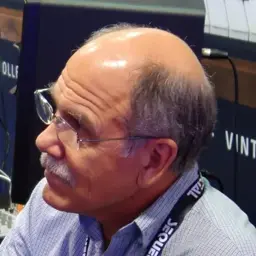
Dave Smith
1950–2022 · San Francisco, USA
Sequential Circuits, Seer Systems, Dave Smith Instruments (Sequential again from 2015)
- Prophet-5 (1978)
- MIDI (1983)
- Early software synth (Reality)
- Prophet-6 and OB-6
Smith was an engineer who bought a Minimoog and built a sequencer for it; Sequential Circuits started in 1974 selling sequencers and programmers. With John Bowen he designed the Prophet-5: five voices, with every knob position saved in memory by a microprocessor. For the first time you could call up a finished sound at a gig at the press of a button.
In 1981 he proposed a 'Universal Synthesizer Interface' so that synths from different makers could be connected. Working with Roland's Ikutaro Kakehashi and others, it became MIDI, shown in January 1983 by linking a Sequential Prophet-600 to a Roland Jupiter-6. Nobody patented it, which is why everyone adopted it.
Sequential was sold to Yamaha in 1987. Smith went on to write one of the first software synths for an ordinary PC (Seer Systems' Reality), founded Dave Smith Instruments in 2002, and in 2015 Yamaha handed the Sequential name back to him.
Legacy: Patch memory, which every synth since has had, and MIDI, which connects nearly everything in this catalogue, from MIDI keyboards to wireless adapters. He and Kakehashi shared a Technical Grammy for MIDI in 2013.
In the catalogue: Roland WM-1
Photo: Pete Brown, CC BY 2.0, via Wikimedia Commons, cropped.
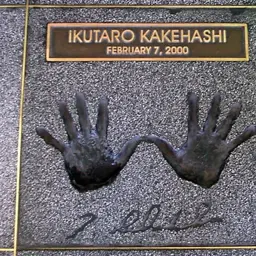
Ikutaro Kakehashi
1930–2017 · Osaka, Japan
Ace Tone, Roland, ATV
- Rhythm Ace drum machines
- Roland (1972)
- TR-808 (1980)
- TB-303 (1981)
- MIDI
Kakehashi started out repairing watches and radios in post-war Osaka. In 1960 he founded Ace Tone, which made electronic organs and some of the first commercial drum machines, and in 1972 he started Roland.
Roland made synths reliable and affordable. Its TR-808 drum machine and TB-303 bass line were meant as realistic stand-ins for a drummer and a bass player, and sold poorly at first. Once they turned up cheap second-hand, they became the sound of hip hop, electro, house and acid. He backed MIDI alongside Dave Smith, and left Roland in 2013 to found ATV.
Legacy: The 808 kick and cowbell, the squelch of the 303, and MIDI. Roland also put synths in bedrooms: the Juno-106 and SH-101 were everywhere by the late 80s.
His handprints on Hollywood's RockWalk. Photo: Ariga, CC BY-SA 4.0, via Wikimedia Commons, cropped.
Tsutomu Katoh and Fumio Mieda
Tokyo, Japan
Keio Electronic Laboratories, later Korg
- Donca-Matic rhythm machine (1963)
- miniKORG 700 (1973)
- MS-20 (1978)
- M1 (1988)
- Pocket tuners
Katoh was the businessman who backed an accordionist, Tadashi Osanai, in building a rhythm machine; the company they started in 1962 was called Keio, and the instruments were sold as Korg (Keio + organ). Fumio Mieda, an engineer who had worked on organs, designed its first synth, the miniKORG 700, and later the MS-20, a patchable monosynth with a famously aggressive filter.
Korg's M1 (1988) put sampled sounds, effects and a sequencer in one keyboard and became one of the best-selling synths ever made.
Legacy: The workstation, and cheap analogue made fun again (monotron, volca, minilogue). Korg also reissued the MS-20 and, with ARP's founders, the ARP Odyssey and 2600.
The digital turn (1967–1990s)
Computers and chips opened up sounds analogue circuits couldn't make, and eventually made real instruments reproducible from a keyboard.
John Chowning
born 1934 · Stanford, California, USA
Stanford University (CCRMA); licensed to Yamaha
- FM synthesis (1967)
- CCRMA (1975)
- The Yamaha DX7, via a licence
Chowning was a composer, not an engineer. In 1967, playing with vibrato on a Stanford computer, he sped the vibrato up until it was no longer a wobble and heard new tones instead. That is frequency modulation: one sine wave bending the pitch of another so fast that it creates new harmonics. With two sine waves he could make bells, brass and electric pianos.
Stanford patented it and licensed it to Yamaha in the early 1970s. Yamaha spent a decade making it cheap enough for a keyboard, and the DX7 (1983) followed. The patent became one of the most lucrative Stanford ever held.
Legacy: FM, the bright, glassy sound of 80s pop, still at the heart of Yamaha's synths today.
In the catalogue: Yamaha reface DX, Yamaha MONTAGE M6
Kim Ryrie and Peter Vogel
Sydney, Australia
Fairlight
- Fairlight CMI (1979)
- Sampling
- Page R on-screen sequencer
- Light pen
Two school friends from Sydney started Fairlight (named after a hydrofoil ferry on Sydney Harbour) to build a digital synthesiser. Their synthesis was harder than they'd hoped, so, almost as a side feature, they let it record a real sound and play it back across the keyboard. That was sampling.
The CMI cost as much as a house. Peter Gabriel, Kate Bush, Herbie Hancock and Thomas Dolby bought one anyway, and its Page R screen let you build patterns by editing a grid rather than playing them in.
Legacy: Sampling, and writing music on a screen. The MPC and every DAW's pattern editor come from here.
Wolfgang Palm
Hamburg, Germany
PPG (Palm Products GmbH), later with Waldorf
- Wavetable synthesis
- PPG Wave 2 (1981)
- Digital oscillators, analogue filters
Palm was a self-taught designer building modular synths in Hamburg in the 1970s. His idea was to store dozens of single-cycle waveforms in a table and let the player sweep through them with an envelope or LFO, so the tone changes shape as the note plays. The PPG Wave ran those digital oscillators through analogue filters. Tangerine Dream and Thomas Dolby were early users.
PPG closed in 1987, and Palm worked with Waldorf, whose Microwave carried the wavetable idea on.
Legacy: Wavetables: the engine behind Serum and much of modern electronic music, and in hardware such as the Nord Wave 2.
In the catalogue: Nord Wave 2
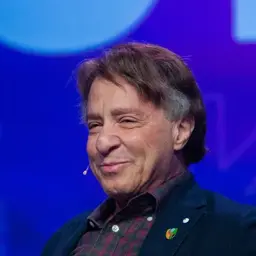
Ray Kurzweil
born 1948 · Massachusetts, USA
Kurzweil Computer Products, Kurzweil Music Systems
- Reading machine for the blind (1976)
- Kurzweil K250 (1984)
- Convincing sampled acoustic instruments
Kurzweil was known for optical character recognition and a machine that read printed books aloud. Stevie Wonder was one of its first users, and the two got talking about whether a keyboard could ever really sound like a grand piano or an orchestra. Kurzweil Music Systems was founded in 1982 to try.
The K250 (1984) sampled acoustic instruments in enough detail that listeners had trouble telling it from the real thing.
Legacy: The realistic sampled piano and orchestra at the heart of every stage keyboard.
In the catalogue: Nord Grand 2, Nord Stage 4 88
Photo: Ståle Grut / NRKbeta, CC BY-SA 2.0, via Wikimedia Commons, cropped.
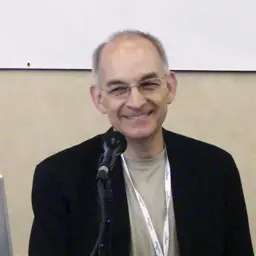
Roger Linn
born 1955 · Los Angeles, USA
Linn Electronics, Akai (MPC), Roger Linn Design
- LM-1 Drum Computer (1980)
- LinnDrum (1982)
- MPC60 (1988)
- Swing quantise
- LinnStrument (2014)
Linn was a session guitarist who wanted a drum machine that sounded like real drums. The LM-1 (1980) played short digital recordings of a real kit and let you program in swing. Prince used it all over his early-80s records.
After Linn Electronics closed in 1986, he designed the MPC60 for Akai (1988): a sampler, a sequencer and 16 velocity-sensitive pads in one box. It became the centre of hip hop production. He later built the Tempest drum machine with Dave Smith and the LinnStrument, a grid controller with expression on every note.
Legacy: Swing, finger-drummed pads and the MPC way of working, now in every pad controller.
In the catalogue: Akai Professional MPC Live III, Akai Professional MPC One+
Photo: Jolie O'Dell, CC BY 2.0, via Wikimedia Commons, cropped.
Modern makers (1983–now)
Two more recent founders changed what a synth looks like on stage and in the studio.
Hans Nordelius and Mikael Carlsson
Stockholm, Sweden
Clavia (Nord)
- ddrum electronic drums (1983)
- Nord Lead (1995)
- Nord Modular (1997)
- Virtual analogue
Clavia started with ddrum electronic drums, and later sold that business. In 1995 its Nord Lead used DSP chips to calculate how an analogue synth behaves, and gave it a panel of knobs painted red. It wasn't the only early virtual analogue synth, but it was the one that caught on. The Nord Modular (1997) did the same for a patchable modular, edited from a computer.
The Nord Electro and Nord Stage then brought the same thinking to pianos and organs, and made the red keyboard a fixture on tour stages.
Legacy: Virtual analogue, and the stage keyboard as one instrument that does piano, organ and synth well. See every Nord in the catalogue.
In the catalogue: Nord Lead, Nord Modular, Nord Lead A1, Nord Stage 4 88
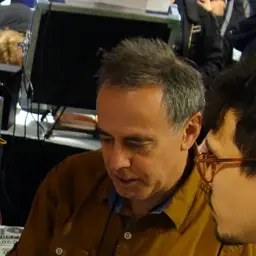
Dieter Doepfer
Munich area, Germany
Doepfer Musikelektronik
- A-100 modular (1995)
- The Eurorack format
- MIDI-to-CV interfaces
Doepfer made synth kits and MIDI interfaces before launching the A-100 modular system in 1995. It used standard 3U rack hardware, small 3.5 mm patch leads, and a simple published spec for module size and power.
Because that spec was open, anyone could build modules that fit, and hundreds of small makers did.
Legacy: Eurorack: thousands of modules from hundreds of makers, and the main reason modular synths came back.
Photo: Pete Brown, CC BY 2.0, via Wikimedia Commons, cropped.
More names worth knowing
- Hugh Le Caine (Canada): the Electronic Sackbut (1945–48), with a touch-sensitive keyboard that responded to pressure and sideways movement, decades before MPE.
- Harald Bode (Germany, later the USA): early modular ideas in the 1950s, plus the frequency shifter and one of the first vocoders sold to musicians.
- Max Mathews (Bell Labs, USA): MUSIC (1957), the first program to make sound on a computer, and the starting point for software synthesis.
- Wendy Carlos (USA): not an inventor, but her feedback shaped Moog's modules, and Switched-On Bach proved what a synth could do.
- Chris Huggett (England): the EDP Wasp (1978), the OSCar (1983) and later the Novation Bass Station.
Who gave us what
- Playing electronic sound live: Léon Theremin.
- Additive tone and drawbars: Laurens Hammond.
- Drawing sound as curves: Daphne Oram.
- Voltage control, the ladder filter and the keyboard synth: Robert Moog.
- West coast synthesis and the step sequencer: Don Buchla.
- Stable, semi-modular synths for bands: Alan R. Pearlman (ARP), and EMS in London.
- Polyphony from stacked voices: Tom Oberheim.
- Patch memory and MIDI: Dave Smith, with Ikutaro Kakehashi.
- Affordable drum machines and synths: Ikutaro Kakehashi (Roland) and Korg.
- FM synthesis: John Chowning, built by Yamaha.
- Sampling: Kim Ryrie and Peter Vogel (Fairlight), then Ray Kurzweil for realism.
- Wavetables: Wolfgang Palm.
- The MPC and swing: Roger Linn.
- Virtual analogue on stage: Clavia (Nord).
- Eurorack: Dieter Doepfer.