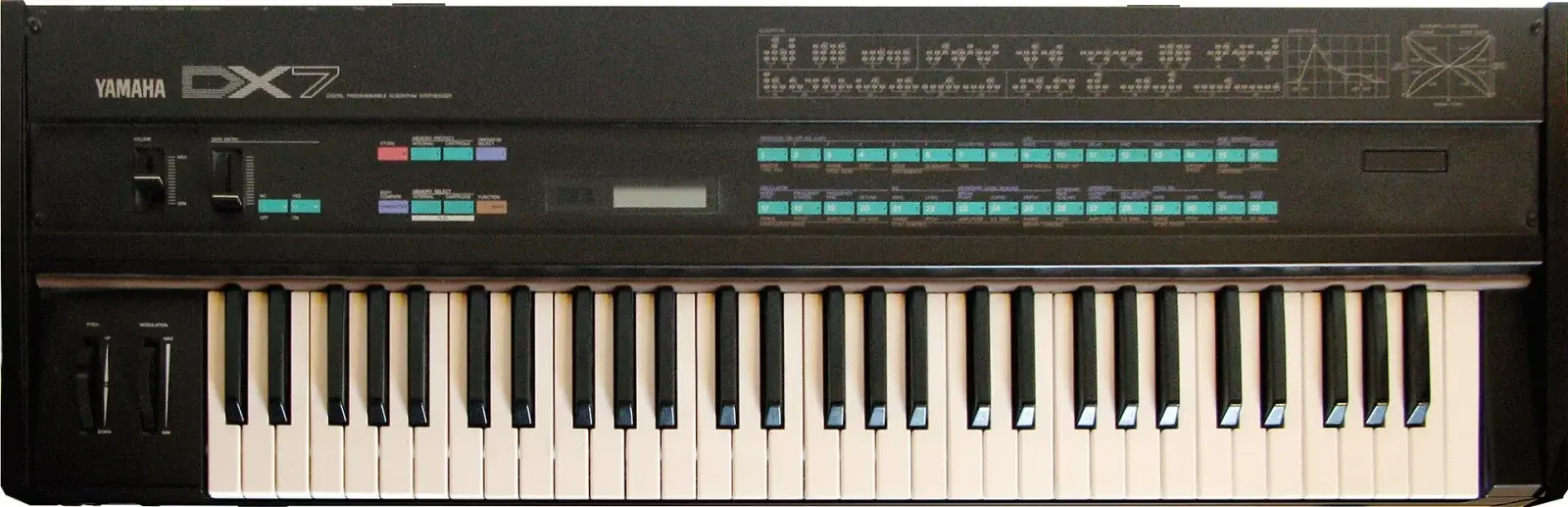
The DX7II-D. Photo: deepsonic, CC BY 2.0, via Wikimedia Commons, resized.

Yamaha DX7II
LegacyReleased 1986
The DX7 rebuilt for players who had learned what they wanted from the first one: the same six-operator FM engine, but bi-timbral, so two sounds can be split or layered, in stereo, with a bigger screen and finer control. Sold as the DX7II-D, the DX7II-FD with a floppy drive, and the cheaper single-timbral DX7s, with a 76-key Centennial edition in 1987. It sounds cleaner and quieter than the original, which is a selling point to some and the opposite to others.
Replaces DX7
Specifications
General
- Manufacturer
- Yamaha
- Status
- Legacy
- Released
- 1986
Sound engine
- Engine
- Digital (FM)
- Voices
- 16
- Polyphony
- 16 voices
- Oscillators
- 6 sine-wave operators per voice, 32 algorithms
- Filter
- None
- Multi-timbral parts
- 2
- Sequencer
- None
Keyboard
- Keys
- 61
- Key size
- Full
- Key action
- Synth-action
- Aftertouch
- Channel
Format
- Format
- Keyboard
- Features
- Bi-timbral split and layer, Stereo outputs, Micro-tuning, Floppy drive (DX7II-FD), Loads original DX7 sounds, 76-key Centennial edition (1987)
Connections
- MIDI ports
- DIN in, DIN out, DIN thru
- CV / Gate
- No
Featured in
Sleeve notes · Instrument story
The DX7: the sound of the eighties
Yamaha's DX7 put FM synthesis into a keyboard most bands could afford in 1983, and its presets ended up on a remarkable share of the decade's hits. How it came about, why nobody could program it, and eleven records to hear it on.
Blog · Shop visit
Why I still go into music shops
Trying the MODX M7 at Yamaha Music London, a chat with a stranger who owns a DX7II, and why the shop that gives you its time should get the sale.